

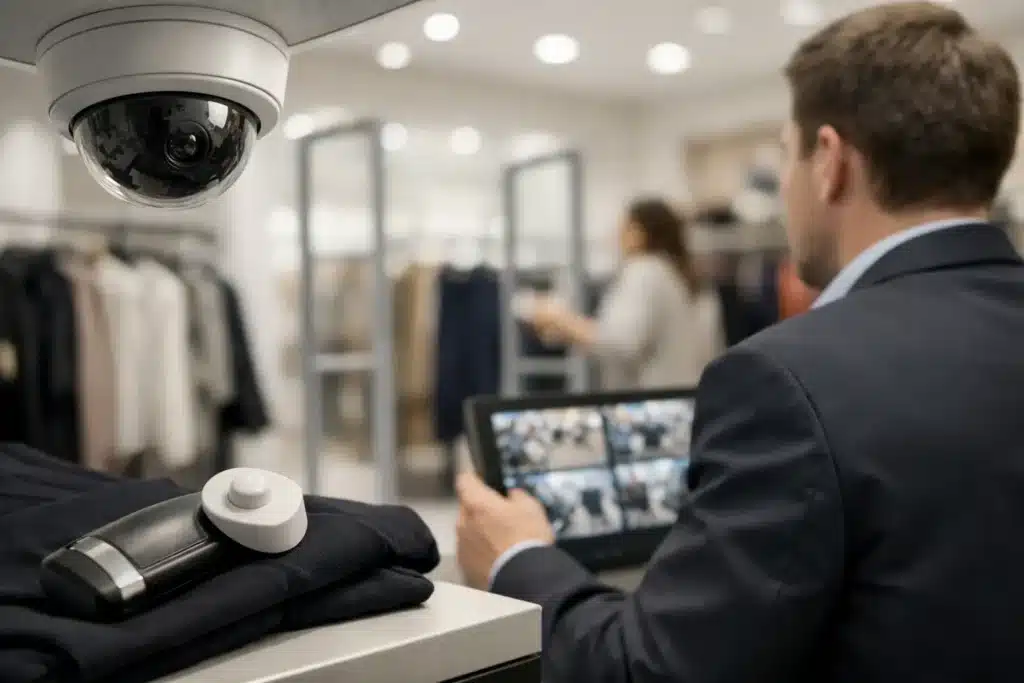
A missing item is rarely just a missing item. For a retail operator, it can point to shoplifting, refund abuse, receiving errors, employee theft, poor stock controls, or a blind spot in the store layout. Retail loss prevention technologies give managers the evidence and visibility to identify the real cause, respond proportionately, and reduce repeat losses without disrupting the customer experience.
For retailers in Dubai, Abu Dhabi, and Sharjah, the decision also has a compliance dimension. A camera system that cannot meet authority requirements, retain usable footage, or provide the required coverage can create delays and leave the business exposed. The right solution must protect inventory and support approvals from the beginning.
Where retail shrinkage actually happens
Shrinkage is often treated as a single number at the end of a reporting period. That approach makes it difficult to fix. The practical question is where stock leaves the expected process: on the sales floor, at self-checkout, through returns, during delivery receiving, in a stockroom, or at the point of cash handling.
Each area requires a different control. High-resolution surveillance can document activity at tills and entrances, but it will not correct an inaccurate goods-receiving process on its own. Electronic article surveillance can deter the removal of tagged merchandise, but it does not explain recurring discrepancies in a warehouse-to-store transfer. Effective loss prevention starts with a site-specific risk assessment, not a shopping list of devices.
Retailers should also distinguish between prevention and investigation. A visible camera, controlled access door, or EAS pedestal can discourage opportunistic theft. When an incident occurs, however, managers need clear footage, accurate timestamps, transaction context, and a defined process for reviewing evidence. Both functions matter.
Retail loss prevention technologies for layered protection
The strongest retail environments use connected controls at the points where inventory, cash, people, and deliveries change hands. Technology should support store teams rather than add unnecessary steps to already busy operations.
CCTV built for identification and evidence
CCTV remains the foundation of most retail loss prevention plans because it covers multiple risks at once. Properly designed cameras can monitor entrances, sales aisles, cash wraps, self-checkout zones, fitting rooms from permitted exterior angles, stockrooms, loading areas, and perimeter access points.
Coverage is only useful when the image quality matches the purpose. A wide overview camera may show that an event occurred, while a targeted camera at a register or high-value display may be needed to identify actions, products, or individuals. Camera placement, lighting, lens selection, recording capacity, and retention periods must be designed together.
For regulated sites in the UAE, compliance requirements can affect camera locations, recording standards, control room arrangements, and documentation. SIRA-approved CCTV installations in Dubai, as well as applicable Abu Dhabi and Sharjah requirements, should be planned before equipment is installed. Retrofitting an unsuitable system after an inspection is slower and more expensive than getting it approved right the first time.
Video analytics that prioritize real events
Modern analytics can help teams find relevant activity in large volumes of video. Depending on the system and the store risk profile, alerts may flag after-hours movement, loitering in restricted areas, people entering through staff doors, crowding near an entrance, or objects left in designated zones.
Analytics are not a replacement for trained review. False alerts can waste time, especially in busy stores with changing displays, reflections, and high foot traffic. They work best when rules are calibrated to the specific location and reviewed after opening hours, promotional events, and layout changes. The objective is fewer blind spots and faster investigation, not an endless stream of notifications.
Electronic article surveillance and RFID
EAS tags and detection pedestals are effective for merchandise that is easy to conceal or frequently targeted, such as apparel, cosmetics, electronics accessories, and packaged high-value goods. The visible presence of an EAS system can discourage casual theft, while alarm events prompt staff to follow a consistent response procedure.
RFID adds a broader inventory-management capability. It can support faster cycle counts, better stock accuracy, item-level tracking, and improved replenishment. This makes it particularly useful for retailers with large SKU counts or frequent stock movement between branches. The trade-off is cost and process discipline: RFID labels, readers, system integration, and staff workflows must all be maintained for the data to remain reliable.
For some stores, EAS is the right starting point. For multi-location retailers with recurring stock variance and a need for accurate inventory visibility, RFID may justify the higher investment.
POS exception reporting and transaction controls
Many loss events leave a transaction trail before they appear as a stock discrepancy. POS exception reporting can identify unusual patterns such as excessive voids, repeated refunds, no-sale drawer openings, price overrides, discount misuse, or transactions processed outside normal operating hours.
This data should be reviewed with context. A high refund count may result from a genuine product issue, a seasonal campaign, or a training gap. Linking POS data to synchronized CCTV footage allows management to verify what happened rather than drawing conclusions from a report alone. It protects the business while supporting fair, evidence-based investigations.
Access control for stockrooms and restricted areas
Stockrooms, cash offices, server rooms, and receiving doors should not rely on mechanical keys alone. Access control records who entered a protected area and when, while permissions can be limited by role, shift, or location. Lost credentials can be removed quickly without changing locks across the facility.
Access events are especially valuable when combined with surveillance coverage and receiving records. If a discrepancy is identified after a delivery, managers can review the relevant door activity and video within a defined time window. That reduces investigation time and improves accountability across store, warehouse, and contractor teams.
Design the system around retail operations
A loss prevention system can fail even when every device works technically. Cameras blocked by seasonal displays, EAS tags not applied consistently, uncontrolled visitor access, and staff who do not know how to respond to alarms all reduce the value of the investment.
Begin with a survey of the store journey: delivery arrival, receiving, storage, replenishment, customer movement, checkout, returns, cash collection, and closing. Review the highest-loss categories and the times when incidents are most likely to occur. Then assign a control to each meaningful risk point.
Integration should be practical. A retail manager may need to pull video tied to a refund transaction. A security supervisor may need an alert when a rear door opens after closing. A facility manager may need assurance that the surveillance system remains operational and compliant. These are different tasks, so dashboards, user permissions, and reporting should be configured for the people who will actually use them.
Privacy also requires careful handling. Cameras should serve a defined security purpose, access to footage should be controlled, and retention practices should align with applicable rules and business requirements. Clear internal procedures reduce misuse and help staff understand that monitoring is part of a professional security program, not an arbitrary measure.
What to expect from an implementation partner
Retail operators need more than equipment supply. They need a contractor that can assess risks, design coverage, manage authority submissions where required, install with minimal disruption, test every component, train users, and provide ongoing maintenance.
ALNAJAH ALAWAL Security Systems & Equipment Trading L.L.C. approaches retail security as an operational and compliance project. That means checking coverage before installation, coordinating approved CCTV requirements, commissioning systems properly, and ensuring store teams can retrieve the evidence they need when an incident occurs.
Maintenance is not optional after handover. Dirty lenses, failed hard drives, disconnected cameras, depleted backup power, and altered store layouts can gradually create exposure. Scheduled inspections and health checks keep the system ready for both routine monitoring and critical incidents.
Make loss prevention measurable
The most useful metric is not the number of cameras installed. Track shrinkage by location and category, alarm events, stock-count variance, time required to investigate incidents, recurring POS exceptions, and system uptime. These measures show whether the controls are changing outcomes.
Avoid assuming that more surveillance always means better protection. A smaller system with correct coverage, clear operating procedures, reliable recording, and trained staff can outperform a larger installation with poor placement and no review process. The right investment depends on store size, merchandise profile, operating hours, transaction volume, and regulatory obligations.
The best next step is a focused site survey that turns known loss points into a clear, compliant design. When every camera, credential, alarm, and report has a defined purpose, loss prevention becomes a controlled business process rather than a reaction after inventory has already disappeared.