

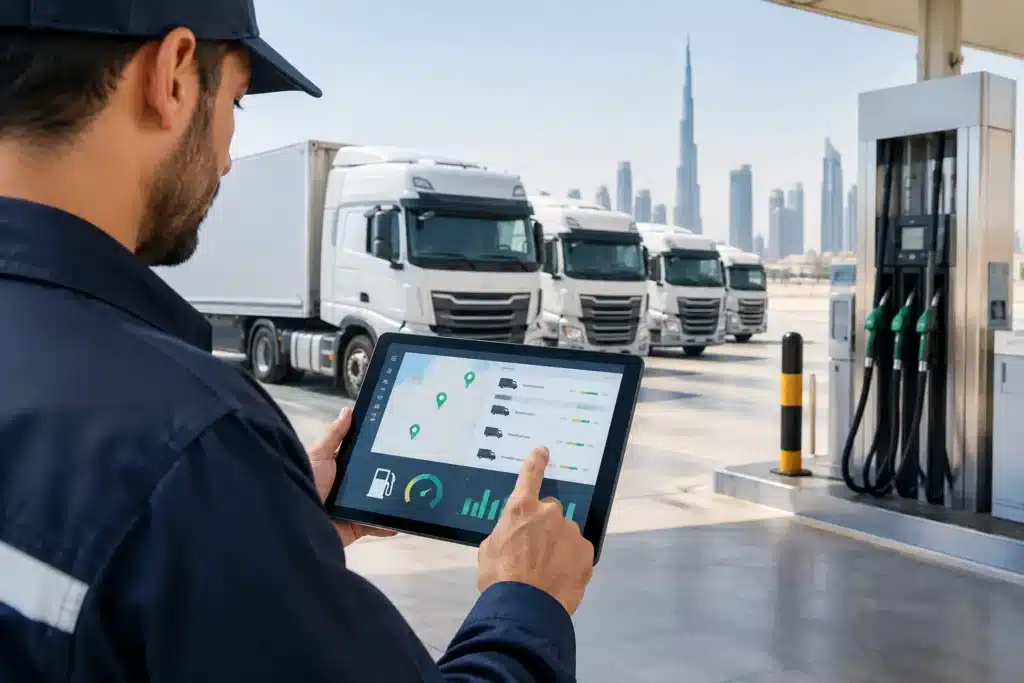
A fuel management system Dubai fleet operators can rely on does more than record fuel purchases. It shows what happens between the fuel tank, the vehicle, the route, and the driver. For logistics fleets, construction equipment, delivery vehicles, buses, and service fleets, that visibility can be the difference between controlled operating costs and unexplained monthly losses.
Fuel is one of the largest variable expenses in fleet operations. A small difference in consumption across several vehicles can quickly become a serious cost issue. Manual logbooks, fuel receipts, and driver reports rarely provide enough evidence to identify whether the cause is idling, unauthorized use, poor routing, inefficient driving, leakage, or theft.
A properly designed fuel monitoring solution gives fleet managers verified data they can act on. It creates accountability without relying on assumptions, helps protect fuel assets, and supports better decisions across the operation.
What a Fuel Management System Should Measure
A fuel management system combines fuel level monitoring with vehicle tracking and reporting. Installed correctly, it monitors fuel movement inside a vehicle or equipment tank and compares it against the vehicle’s location, speed, engine activity, route, and operational hours.
The most useful systems provide accurate fuel level data rather than only estimating consumption from distance traveled. This requires compatible fuel sensors, proper tank calibration, secure wiring, and configuration based on the vehicle type. A poorly calibrated sensor can create misleading alerts and cause management to question the entire system. Installation quality matters as much as the hardware itself.
For most commercial fleets, the system should help managers identify fuel fills, sudden fuel drops, average consumption, idling-related usage, distance-based consumption, and fuel use per engine hour. The right metric depends on the asset. A delivery van is commonly measured by distance, while generators, excavators, refrigerated units, and stationary equipment are better assessed by operating hours.
GPS integration adds necessary context. A report showing fuel consumption is useful. A report that shows consumption while a vehicle was parked, outside an approved route, or operating after authorized hours is far more valuable.
Why Dubai Fleets Need Better Fuel Visibility
Operating conditions in Dubai can make fuel analysis more complex. Traffic congestion, long idle periods, high ambient temperatures, construction-site access, and multi-shift operations all affect consumption. A manager cannot fairly assess a driver or vehicle using a single average figure without understanding how and where the asset is being used.
This is why a fuel management system must be configured around the real operation. A transport company with fixed city routes needs different reports from a contractor moving equipment between project sites. A cold-chain operator may need to monitor auxiliary equipment use. A fleet with night shifts may need alerts for refueling or fuel-level drops outside approved working hours.
The objective is not to create excessive alerts. It is to give the operations team evidence when an exception needs attention. When exceptions are credible, supervisors can respond quickly and fairly.
Common Causes of Fuel Loss
Fuel theft receives attention because it can be immediate and visible, but it is not the only source of loss. In many fleets, poor operating discipline creates a larger long-term impact than isolated theft incidents.
Excessive idling is a frequent issue, especially when drivers wait at loading areas, customer locations, or work sites. Harsh acceleration, speeding, unauthorized detours, underinflated tires, delayed maintenance, and unsuitable route planning can also increase consumption. In equipment fleets, fuel may be consumed during nonproductive engine hours or through inefficient operator practices.
A monitoring system helps separate normal operating variation from preventable waste. For example, a vehicle that uses more fuel than similar vehicles may have a mechanical issue rather than a driver problem. The data should prompt an inspection, not an automatic accusation.
Fuel theft alerts should also be handled carefully. A sudden drop in tank level may indicate unauthorized extraction, but the event should be compared with vehicle position, ignition status, known fuel station activity, sensor behavior, and the tank’s shape. Professional configuration reduces false alarms and helps managers investigate with confidence.
Fuel Management System Dubai: Key Features That Matter
Not every fleet needs the same platform, but several capabilities deliver value across most commercial operations. Real-time fuel level monitoring allows managers to see tank levels and identify abnormal changes. Fill and drain alerts can notify authorized staff when fuel enters or leaves a tank. Historical reports show whether an issue is isolated or recurring.
Geofencing is equally important. A fleet manager can define depots, fuel stations, customer locations, work sites, and restricted areas. Fuel events can then be reviewed against approved locations. This provides a clearer audit trail than a receipt alone.
Driver behavior monitoring should be considered alongside fuel reporting. Idling, harsh acceleration, speeding, and route deviations can influence consumption and vehicle wear. The goal is to coach drivers using facts and improve operating standards, not to turn every report into a disciplinary process.
Maintenance planning is another practical benefit. If fuel consumption rises gradually over time, the cause may be injector performance, air filter condition, tire pressure, engine tuning, or another maintenance concern. Early identification can prevent higher repair costs and reduce downtime.
For organizations with mixed assets, the platform should support cars, trucks, buses, generators, machinery, and tankers where required. Before selecting equipment, confirm that the proposed sensors and tracking devices are suitable for each tank type, voltage requirement, operating environment, and reporting need.
The Installation Process Determines Data Quality
A fuel management project should begin with a site and fleet assessment. This identifies vehicle models, tank capacities, asset categories, operating schedules, existing tracking devices, reporting requirements, and the specific losses the business wants to control.
The next stage is system design. A professional provider determines which assets require fuel sensors, which need GPS tracking only, and which reports are relevant to management. Installing identical equipment on every vehicle may not be the most cost-effective approach. High-consumption vehicles, high-risk routes, and equipment with frequent fueling events often deserve priority.
During installation, sensors must be fitted securely and calibrated to the actual tank. This step is essential because tanks are rarely perfect rectangles. Their shape, internal components, mounting angle, and usable capacity affect how raw sensor readings convert into liters or gallons. Calibration should be checked through controlled fill and consumption testing.
Testing and commissioning should confirm GPS position accuracy, ignition status, fuel reading stability, event alerts, reporting logic, and user access levels. Fleet managers also need practical training. A powerful dashboard has limited value if users do not know how to verify an alert, compare reports, or set an appropriate response procedure.
ALNAJAH ALAWAL SECURITY SYSTEMS & EQUIPMENT TRADING L.L.C. approaches fleet technology as an operational control system, covering assessment, equipment supply, installation, testing, training, and ongoing support. This gives fleet operators one accountable partner from initial survey through system use.
How to Use Fuel Data Without Creating More Admin Work
The best systems make management easier, not more complicated. Start with a small set of measures that match your operation: fuel consumed per kilometer, fuel consumed per engine hour, idle time, fuel-fill events, unexpected drops, and distance traveled outside approved routes.
Review exceptions first. Managers do not need to study every vehicle every day. They need a weekly process that highlights the largest variances, then investigates only where the data indicates a genuine concern. This keeps the team focused on action rather than report volume.
Set realistic baselines before making major decisions. A vehicle operating on congested urban routes will not perform like one traveling on highways. A loaded truck will not consume fuel like an empty truck. Compare similar vehicles performing similar work, and factor in load, route, engine hours, and seasonal operating conditions.
Clear internal procedures are also essential. Define who receives fuel alerts, who checks the event, how drivers are consulted, and when maintenance staff are involved. A system creates evidence, but management procedures determine whether that evidence reduces loss.
Questions Fleet Managers Should Ask Before Buying
Can the system prove a fuel event, not just estimate it?
Ask how fuel fills and sudden drops are identified, how sensors are calibrated, and what information appears with each alert. Reliable verification should include timestamp, location, vehicle status, and fuel-level change.
Will it work with our existing fleet tracking platform?
Integration can reduce duplicate work, but compatibility should be confirmed before installation. If a unified platform is not possible, reporting responsibilities should be defined clearly so the team does not rely on conflicting data sources.
What support is available after installation?
Fuel monitoring requires periodic attention. Fleet changes, new vehicles, sensor checks, user training, and report adjustments may all be required as operations grow. Choose a provider that remains accountable after commissioning.
A fuel management system is most effective when it is treated as part of fleet discipline, not as a standalone device. Start with an accurate survey, prioritize the assets with the greatest fuel exposure, and build reporting around decisions your team can make. Better data gives managers the control to protect fuel, improve vehicle performance, and keep operations moving with fewer costly surprises.