

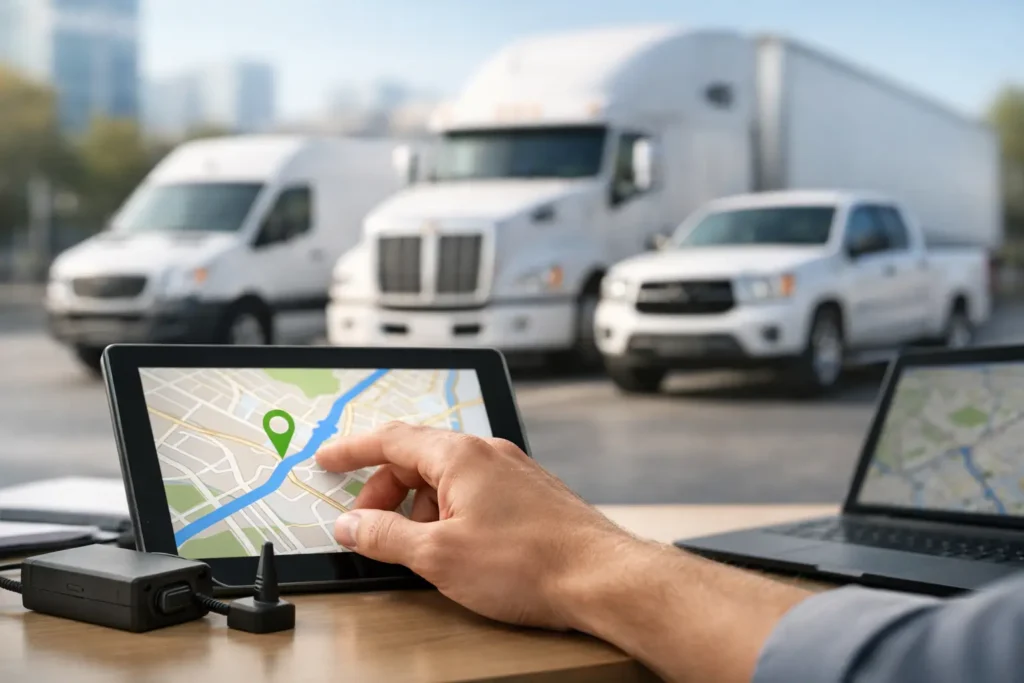
When a delivery vehicle takes an unapproved route, idles for 90 minutes, and refuels without a matching trip record, the problem is not visibility alone. It is control. Choosing the best gps tracking system for fleet management means finding a platform that gives fleet operators clear oversight, faster decisions, and reliable evidence when costs or incidents need explaining.
For fleet managers, logistics operators, contractors, and transport businesses, the right system does more than place dots on a map. It helps reduce fuel waste, improve driver accountability, verify job execution, and support operational discipline across the fleet. That is why the buying decision should be based on business fit, not just software appearance or device price.
What makes the best GPS tracking system for fleet management
The best system is the one that matches how your fleet actually operates. A courier fleet has different needs from a construction company, a refrigerated transport operator, or a service business with mixed vehicles and equipment. Some fleets need second-by-second location visibility. Others need stronger reporting, fuel monitoring, geofencing, or driver behavior analysis.
A dependable fleet tracking system should give you accurate live tracking, trip history, route playback, geofence alerts, idle reports, speeding alerts, and driver performance data. Those are the basics. Beyond that, the real value comes from how well the system turns raw movement data into operational action.
If your team cannot quickly identify unauthorized usage, long idle periods, route deviations, delayed arrivals, or unusually high fuel consumption, the platform may be gathering data without creating control. That gap matters because fleet technology should reduce management effort, not add another dashboard people ignore.
Core features that matter most
Real-time tracking is where most buyers start, but it should not be where evaluation ends. Position updates need to be consistent, reliable, and easy to interpret. If the map is delayed or trip data is incomplete, fleet decisions become reactive instead of proactive.
Fuel monitoring is one of the strongest cost-control features, especially for logistics, transport, and heavy vehicle operations. A good system helps identify excessive consumption, suspicious refueling patterns, and potential fuel loss. When fuel data is combined with route history and idle time, managers get a much clearer picture of where money is being lost.
Driver behavior monitoring is equally important. Harsh braking, rapid acceleration, speeding, excessive idling, and after-hours usage all affect operating cost and vehicle wear. More importantly, they affect safety. The best platforms make these patterns visible without forcing managers to manually interpret every trip.
Geofencing adds another layer of control. It allows you to define job sites, warehouses, customer locations, fuel stations, and restricted areas, then receive alerts when vehicles enter or leave. For service verification and dispatch oversight, this feature is often more useful than live tracking alone.
Reporting quality is what separates a fleet tool from a fleet management system. A strong platform should produce clear, usable reports on utilization, distance traveled, stop duration, idle time, driver behavior, and fuel use. If reports are difficult to read or too technical for daily operations teams, adoption will suffer.
How to judge system quality beyond the software demo
Most systems look capable in a sales presentation. The difference shows up after installation. Device reliability, installation quality, sensor calibration, platform configuration, and technical support all affect results.
This is where many businesses make an expensive mistake. They compare software screens but overlook implementation. A low-cost unit installed poorly can create inaccurate readings, missed trips, false alerts, or unreliable fuel data. That weakens trust in the system, and once managers stop trusting the data, the investment loses value.
You should ask practical questions. How stable are the tracking devices in UAE operating conditions? How accurate is the reporting? Can the system support different vehicle types? Is fuel monitoring available where needed? How quickly can technical issues be diagnosed and resolved? Who handles installation, testing, and after-sales support?
For businesses operating under strict control environments, supplier capability matters as much as product capability. A contractor that understands technical deployment, testing, and long-term maintenance will usually deliver better outcomes than a reseller focused only on hardware supply.
Choosing the best fit for your fleet type
There is no single best gps tracking system for fleet management for every business. It depends on vehicle mix, operating model, and the level of control you need.
For last-mile delivery fleets, route visibility, stop verification, idle reduction, and driver discipline are often the top priorities. For transport and logistics operators, fuel control, trip accuracy, dispatch support, and utilization reporting usually matter more. Construction and industrial fleets may need tracking across both vehicles and mobile assets, with stronger emphasis on location history, site entry alerts, and unauthorized usage detection.
Mixed fleets require flexibility. If you manage sedans, vans, trucks, and specialist vehicles under one operation, the platform should support different reporting needs without forcing separate systems. That saves time and reduces reporting gaps across departments.
Scalability also matters. A system that works for ten vehicles may become difficult to manage at fifty or one hundred if the dashboard, alerts, or reporting structure is not designed for growth. The best choice is one that fits now and still works as your fleet expands.
Compliance, accountability, and operational risk
Fleet tracking is often discussed as a productivity tool, but for many businesses it is also a risk-control system. If a vehicle is involved in a complaint, late delivery, misuse allegation, or route dispute, location records and trip history provide factual evidence. That helps management respond quickly and with confidence.
For businesses that already operate in regulated environments, this kind of accountability is not optional. Accurate records support internal investigations, customer service response, and management reporting. They also help create stronger driver policies because expectations are backed by verifiable data.
In the UAE, businesses often prefer working with technology partners that understand compliance-driven operations, installation discipline, and project execution. That is one reason companies such as ALNAJAH ALAWAL SECURITY SYSTEMS & EQUIPMENT TRADING L.L.C. are trusted for fleet technology deployments alongside wider security and ELV requirements. The value is not only the device. It is getting the system installed correctly, configured properly, and supported over time.
Common mistakes when selecting a fleet tracking system
The first mistake is buying on price alone. Low entry cost can be attractive, but poor data quality, weak support, and limited reporting usually cost more later. Fleets end up replacing devices, changing providers, or running manual checks because the platform does not answer basic operational questions.
The second mistake is choosing too many features that no one uses. A platform should be comprehensive, but it should also be practical. If dispatchers, transport supervisors, and management teams cannot use it easily, capability on paper will not improve field performance.
The third mistake is ignoring support and maintenance. Tracking devices operate in demanding conditions, and issues can occur over time. Fast troubleshooting, replacement support, and system checks are part of the service, not an optional extra.
The fourth mistake is failing to define success before rollout. If you do not decide whether the goal is lower fuel cost, better dispatch control, stronger driver behavior, or improved asset utilization, it becomes difficult to measure whether the system is working.
What a strong implementation looks like
A well-executed rollout starts with a fleet assessment. That includes vehicle count, vehicle types, operating hours, routing patterns, fuel risk areas, and reporting needs. From there, the tracking solution should be matched to the operation rather than forced into a generic package.
Installation should be clean, tested, and documented. Alerts should be configured around actual business rules, not default settings. Reports should be aligned with the people using them, whether that is operations, finance, transport control, or management.
Training is also part of success. Drivers need clarity on policy. Supervisors need to know how to respond to alerts and exceptions. Management needs reports that support action, not just observation. When those pieces are handled correctly, the system becomes part of daily fleet control instead of a passive monitoring tool.
The right GPS tracking system gives you fewer unknowns, tighter control, and better evidence across every vehicle movement. If you choose a platform based on your operating reality, with proper installation and support behind it, fleet tracking stops being a map on a screen and starts becoming a measurable business advantage.