

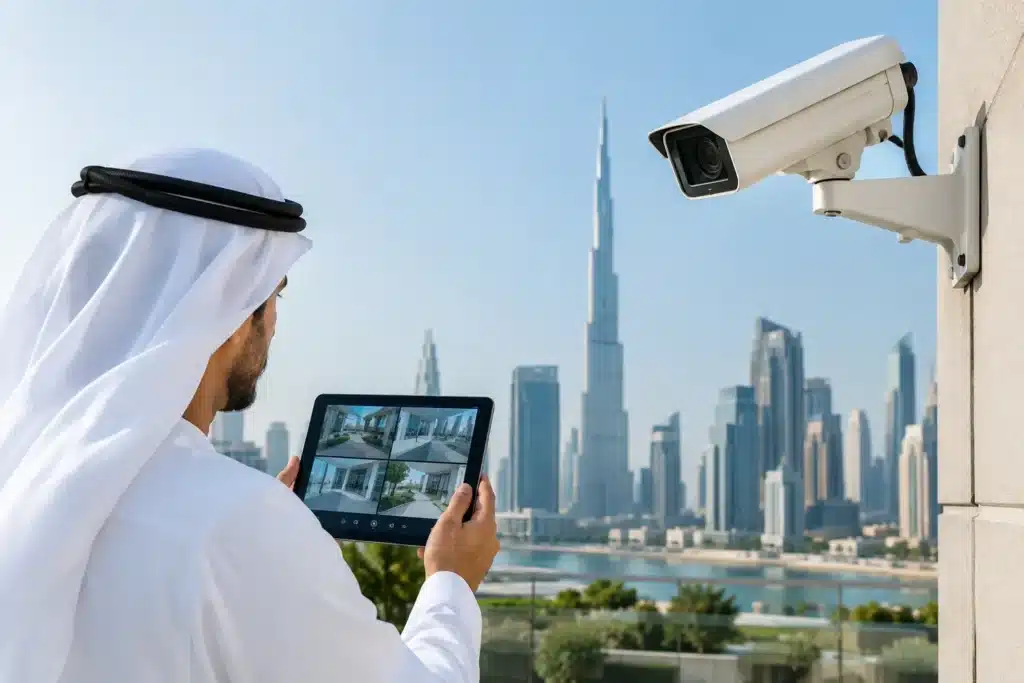
A CCTV system can be fully installed, powered on, and recording – yet still delay an opening, handover, or operational permit if it does not meet SIRA requirements. For commercial sites in Dubai, compliance is not achieved by purchasing cameras alone. It depends on an approved design, suitable equipment, correct installation, complete documentation, and a successful inspection. This guide explains how to get SIRA CCTV approval in Dubai: complete process from the first site review through final handover.
Start With the Right Scope, Not a Camera Quote
The first decision is identifying what SIRA expects from your specific premises. A warehouse, jewelry store, hotel, clinic, labor accommodation, retail outlet, office building, and construction site may face different coverage, retention, monitoring, and access-control expectations. Site size, use, risk level, operating hours, entry points, cash-handling areas, and asset value all affect the required design.
This is why a low-price, generic CCTV quote can become expensive later. If the design misses a required entrance view, has poor image quality at a critical location, or uses recording storage that does not meet the required retention period, correcting it after installation adds cost and time.
A qualified SIRA-approved contractor should begin with a physical site survey. The survey identifies camera positions, blind spots, cable routes, lighting conditions, network availability, equipment room requirements, and the areas that must be recorded clearly. It should also consider practical operational issues, such as whether cameras can be maintained safely after the site is occupied.
How to Get SIRA CCTV Approval in Dubai: The Step-by-Step Process
1. Conduct a site survey and compliance assessment
The contractor reviews the premises against the relevant SIRA security requirements and prepares a system scope. This is the stage to identify whether the project requires fixed cameras, PTZ cameras, access control integration, intercoms, perimeter coverage, control-room monitoring, or other security measures.
For existing facilities, the assessment should include the current CCTV system. Some sites can be upgraded by replacing noncompliant cameras, expanding storage, improving coverage, or reorganizing the network. Others need a complete redesign because the existing infrastructure cannot support the required performance.
2. Prepare the CCTV design and documentation
Once the survey is complete, the contractor develops the design package for approval. The drawings must show more than camera locations. They should make it clear how the system will provide usable coverage and how its components connect.
A typical submission package may include:
- Camera layout drawings and coverage plans
- Equipment schedule with approved camera, recorder, storage, and network details
- System architecture or single-line diagram
- Site information, trade licensing details, and tenancy or ownership documents where applicable
- Method statement, technical specifications, and other forms requested for the project category
Accuracy matters. The approved drawing becomes the reference point for installation and inspection. If the project team changes camera locations during fit-out without updating the design, the site can fail inspection even when the hardware itself is suitable.
3. Submit the design through the required approval channel
The application is submitted through the applicable SIRA process by the authorized party or approved contractor. Submission requirements can vary by premises type and project status, so paperwork should be checked before it is uploaded or presented.
This stage is often delayed by simple issues: inconsistent company names, incomplete drawings, missing supporting documents, or equipment specifications that do not match the proposed system. A compliance-led contractor controls these details early, rather than waiting for a rejection or request for clarification.
Approval of the design is not a signal to improvise on site. It is the approved basis for procurement and installation. If a product substitution is necessary because of availability or technical compatibility, confirm that it remains acceptable before installation proceeds.
4. Install approved equipment to the approved design
After design clearance, installation can begin. The work includes mounting cameras at the correct height and angle, installing containment and cabling, configuring network connections, fitting the recorder and storage, labeling equipment, and securing the control equipment against unauthorized access.
The quality of installation directly affects inspection results. A camera that is technically installed but faces glare, records an obstructed entrance, or produces unreadable facial detail does not serve its compliance purpose. The same applies to poorly terminated cables, unstable network connections, insufficient power protection, and overcrowded equipment cabinets.
For occupied facilities, installation should be planned around business continuity. Retailers may need work completed outside trading hours. Warehouses may require access coordination around loading schedules. Hotels and healthcare facilities need careful routing and housekeeping to protect guests, patients, and daily operations.
5. Configure, test, and commission the system
Before requesting inspection, the contractor must prove that the system works as designed. Commissioning includes testing live views, recording playback, camera names, timestamps, image clarity, retention capacity, remote access controls where permitted, and alarm or access-control integrations if included in the scope.
Storage is a frequent point of failure. The recorder must retain footage for the required period under realistic recording settings, not only under an optimistic calculation. Resolution, frame rate, compression, motion settings, number of cameras, and daily activity all change the storage requirement. A professional calculation and live verification help prevent footage from overwriting too early.
The client should also receive practical operating guidance. Security staff or designated users need to know how to review recordings, export footage when authorized, report faults, and protect login credentials. A compliant system still needs disciplined daily use.
6. Arrange inspection and address observations quickly
When installation and commissioning are complete, the site is prepared for SIRA inspection. The inspector may verify that the installed system matches the approved drawings, check camera views, review recording and playback, inspect equipment placement, and request evidence of proper operation.
Do not treat inspection as a formality. Prepare the site in advance, ensure authorized personnel can provide access to all relevant rooms, and keep records available. Cameras should be clean, powered, connected, and correctly labeled. The recorder must be operational, with accurate date and time settings.
If observations are raised, correct them promptly and document the changes. Some issues are minor, such as a camera angle adjustment or label correction. Others may require additional coverage, revised cabling, more storage, or changes to the equipment-room arrangement. The fastest way to close observations is to have the original installer manage the correction, retesting, and follow-up because they understand the approved design and configuration.
Common Reasons CCTV Approval Gets Delayed
Most delays are preventable. The most common causes are beginning installation before confirming the design, using equipment that does not match the submitted specifications, overlooking coverage at entrances or vulnerable areas, and underestimating recording storage.
Coordination failures also create problems. On new developments, ceilings may close before cable routes are completed, shopfitting can block camera views, or IT teams may not provide the required network connection in time. CCTV compliance should be coordinated with electrical, fit-out, IT, fire, and access-control work from the beginning of the project.
It also depends on the quality of the site information provided. A contractor cannot design accurately without current floor plans, intended use of each area, operating requirements, and knowledge of any planned layout changes. Early disclosure prevents redesigns later.
What Happens After Approval?
Approval is not the end of the compliance obligation. The system must remain operational, recording properly, and capable of producing footage when required. If the premises are expanded, reconfigured, or repurposed, the CCTV design may need review. A camera view that was acceptable for an empty storage area may no longer be sufficient after racking, partitions, displays, or machinery are added.
Ongoing maintenance protects both security performance and approval status. Preventive visits should check camera focus and cleanliness, recorder health, storage capacity, UPS condition where installed, network stability, playback quality, and system fault logs. Waiting for an incident to discover that a camera was offline is not a security strategy.
For businesses managing multiple locations, standardizing equipment, naming conventions, maintenance schedules, and documentation reduces risk. It also makes expansions and future inspections easier to manage.
Choose a Contractor That Owns the Process
SIRA approval involves design, documentation, installation, testing, inspection readiness, and corrective action. Splitting those responsibilities between several vendors can create gaps and arguments when something fails. A single accountable contractor is usually the safer choice, especially when an opening date or project handover is fixed.
ALNAJAH ALAWAL SECURITY SYSTEMS & EQUIPMENT TRADING L.L.C. manages SIRA-compliant CCTV projects from site survey through installation, approval coordination, commissioning, and maintenance support. The objective is straightforward: approved right the first time, with a system that continues to protect your operation after the inspector leaves.
Start before construction closes, before a tenancy deadline approaches, or before a failed inspection becomes urgent. A properly planned CCTV system protects your assets, supports your team, and keeps your Dubai premises ready for inspection.