

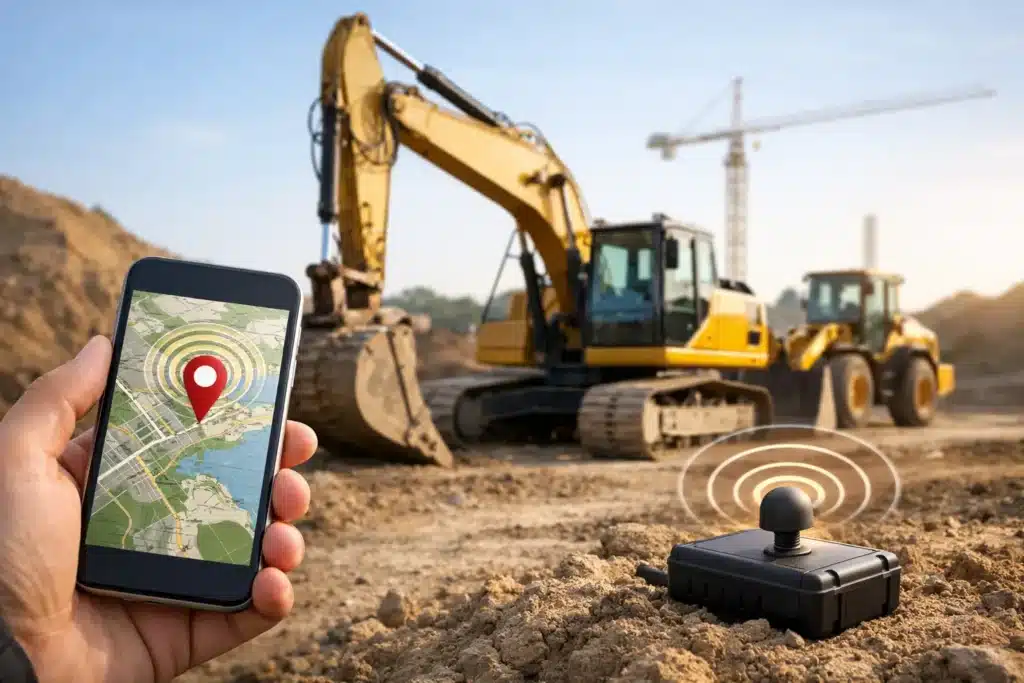
A parked excavator can represent hundreds of thousands of dollars in capital, yet its location, engine hours, and daily activity are often tracked through phone calls, paper logs, or assumptions. GPS tracking for construction equipment replaces that uncertainty with verified operational data. For contractors managing multiple sites, rented assets, subcontractors, and tight project schedules, it creates the control needed to protect equipment and keep work moving.
Why GPS Tracking for Construction Equipment Matters
Construction equipment does not stay in one place. A backhoe may move from a Dubai development site to a storage yard, while generators, compressors, light towers, and skid steers can be reassigned several times in a week. Without a central view of those movements, site teams may spend valuable hours searching for equipment that is idle, underused, or sitting at the wrong location.
A professionally installed GPS tracking system reports an asset’s position through a web or mobile platform. Depending on the device and configuration, it can also report ignition status, engine hours, movement, speed, battery condition, and entry or exit from defined locations. The result is not simply a dot on a map. It is a practical record of how each asset is being used.
This visibility is particularly valuable when equipment is shared between projects. Project managers can confirm whether an asset arrived as planned, fleet managers can identify machines that have not moved for extended periods, and management can make allocation decisions based on actual utilization rather than estimates.
Protect High-Value Equipment Before It Leaves the Site
Equipment theft is rarely limited to a major machine disappearing overnight. Attachments, trailers, compact equipment, fuel bowsers, and generators are all vulnerable because they can be moved quickly and may not have an assigned operator at all times. Recovery becomes much harder once an asset has left a controlled area.
GPS tracking supports a faster response by generating movement alerts and location updates. Geofencing allows a company to set a virtual boundary around a jobsite, depot, workshop, or approved transport route. If equipment leaves that boundary outside permitted hours, designated personnel can receive an alert and verify the movement immediately.
The right alert settings matter. A geofence that is too tight can produce unnecessary notifications when a machine works near a site entrance. A boundary that is too broad may not identify an unauthorized departure soon enough. Site conditions, operating hours, and the type of equipment should determine the configuration.
GPS does not replace physical security. It works best alongside access control, CCTV coverage, secure key management, proper lighting, and clear handover procedures. For high-risk projects, these layers create accountability from the moment a machine enters the site until it returns to the yard.
Turn Utilization Data Into Better Equipment Decisions
A common operational problem is owning or renting more equipment than the project truly needs while another site experiences delays waiting for the same type of machine. GPS data helps expose this gap.
Engine-hour reporting can show whether an excavator is working consistently, sitting idle with the ignition on, or not being used at all. Movement history can help confirm when equipment reached a location and how long it remained there. Over time, this information allows contractors to identify underused assets, reduce unnecessary rental extensions, and plan transfers more accurately.
There is a trade-off: location data alone does not always prove productive work. A machine can remain within a geofence while idling, waiting for materials, or operating inefficiently. For a more useful picture, GPS data should be reviewed with site schedules, operator records, fuel consumption, and maintenance history. The goal is not to monitor every minute without context. The goal is to identify costly exceptions and make informed decisions.
Reduce unauthorized after-hours use
Construction equipment is sometimes used outside approved shifts for private work, unplanned transfers, or purposes unrelated to the project. Ignition alerts, after-hours movement notifications, and trip history make these events visible. Managers can investigate facts rather than rely on conflicting accounts.
This also supports operator accountability. When teams know that equipment movements and engine hours are recorded, handovers become more disciplined and daily reporting becomes more accurate.
Improve Maintenance Planning and Equipment Availability
Breakdowns create more than repair costs. They can stop concrete work, delay material handling, extend labor hours, and disrupt dependent trades. GPS tracking helps maintenance teams plan service around actual engine hours rather than relying only on calendar dates or manually reported readings.
A maintenance schedule can be built around hours of operation and customized by asset type. Alerts can notify the responsible team when a service interval is approaching, giving them time to arrange parts, technicians, and equipment downtime. This reduces the chance that a machine remains in service beyond its planned maintenance point.
The system is most effective when asset records are accurate from the start. Each device should be associated with the correct equipment identification number, site assignment, service interval, and responsible manager. If machines are transferred regularly, those assignments must be updated. Good data discipline is what turns tracking hardware into a dependable maintenance tool.
Select the Right Tracking Method for Each Asset
Not every construction asset needs the same device. Heavy equipment with a stable power supply may use a hardwired tracker that reports ignition and engine activity. Trailers, containers, attachments, and equipment without reliable power may require battery-powered units designed for long reporting intervals. In some cases, a concealed installation is appropriate to reduce the risk of tampering.
Selection should account for the operating environment. Construction sites expose equipment to heat, dust, vibration, water, and long periods without movement. A low-cost device that is not suitable for these conditions can create false alerts, signal loss, or early battery failure. Installation quality is equally important. Poor wiring or incorrect device placement can affect reporting and may create avoidable maintenance issues.
Before deployment, contractors should confirm the following operational requirements:
- Which assets need real-time tracking and which only need periodic location updates.
- Who receives theft, movement, geofence, and maintenance alerts.
- How often the system should report during operation, transport, and idle periods.
- Which managers can view, export, or change asset records and alert rules.
A short site survey and asset review can prevent a mismatched installation. It also establishes a clear plan for device placement, power connections, test procedures, and staff training.
Use Reporting That Site Teams Will Actually Review
The best tracking platform is not the one with the most dashboards. It is the one that gives managers a clear answer to operational questions: Where is the machine? Did it arrive? Has it been used? Is it due for service? Did it leave the approved area?
Daily exception reports are often more valuable than large volumes of raw map data. A fleet manager may review assets that moved after hours, machines with extended idle periods, equipment outside assigned geofences, and units nearing scheduled maintenance. Project leadership may need weekly utilization reports to support rental, transfer, and procurement decisions.
Reporting should also fit company roles. A site supervisor may only require visibility of equipment assigned to that project, while a central fleet team needs a complete view across sites. Role-based access helps protect operational information while keeping each user focused on relevant actions.
Build GPS Tracking Into the Project Process
Tracking delivers the strongest results when it is part of the equipment lifecycle, not an afterthought once an asset is missing. Register the asset when it enters the fleet, install and test the device before deployment, assign its initial site and manager, then make tracking checks part of daily site controls.
At handover, record the asset condition, engine hours, location, and responsible operator or supervisor. When equipment moves, update the assignment and confirm the destination geofence. At the end of a project, review utilization and service history before deciding whether to redeploy, maintain, sell, or return the asset.
ALNAJAH ALAWAL SECURITY SYSTEMS & EQUIPMENT TRADING L.L.C. supports contractors with GPS tracking and fleet management solutions designed around real operating conditions, from equipment surveys and installation to testing, user training, and ongoing support. The focus is simple: clear visibility, reliable alerts, and equipment data that supports decisions on site and at management level.
The most useful first step is to identify the equipment that creates the greatest operational risk, whether that is a high-value excavator, a frequently moved generator, or a trailer that changes sites without a clear record. Track those assets first, set practical rules, and use the findings to build a more controlled equipment operation.