

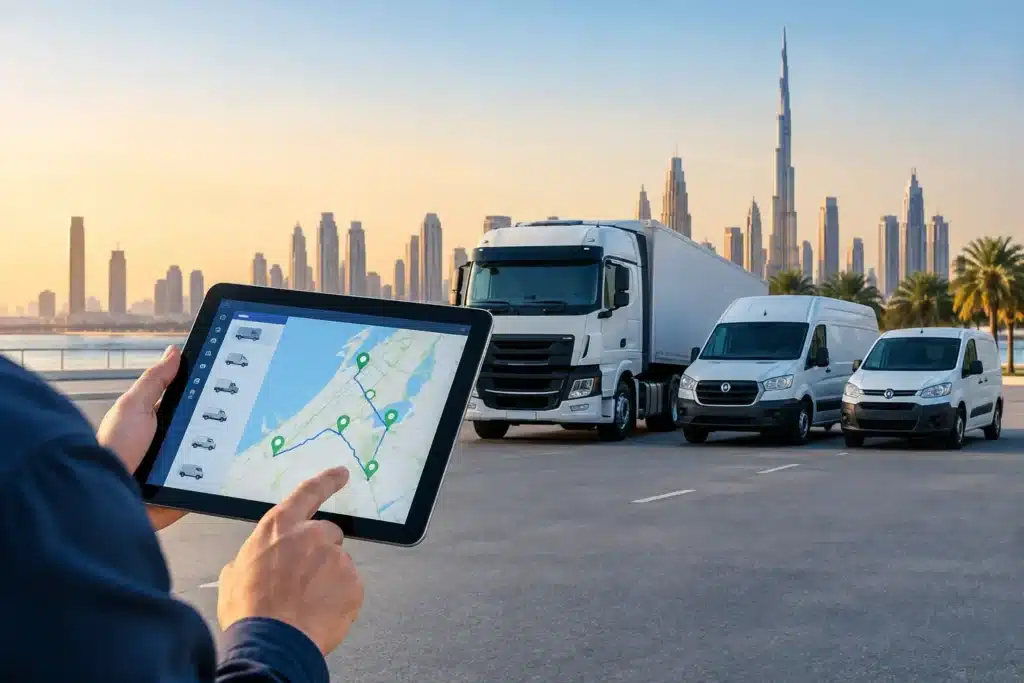
A delivery vehicle that misses two planned stops, idles for an hour, and returns with unexplained fuel usage is not a minor operational issue. Across a fleet, those small gaps become missed customer commitments, higher fuel bills, preventable maintenance costs, and difficult conversations with drivers. GPS tracking UAE solutions give fleet managers the evidence to act early, based on real vehicle activity rather than estimates.
For logistics operators, construction companies, transport businesses, and organizations with corporate vehicles, the value is not simply seeing a dot move on a map. The right system creates daily control over routes, driving behavior, fuel use, vehicle availability, and asset security. It also provides a reliable record when a customer, manager, insurer, or internal team needs answers.
What GPS Tracking UAE Should Deliver
A professional vehicle tracking system should turn location data into decisions. Real-time visibility shows where each vehicle is, its direction, speed, ignition status, and trip history. This helps dispatchers respond when a driver is delayed, reroute a vehicle around congestion, or verify arrival at a customer or project site.
However, location alone does not solve fleet problems. A useful platform should be configured around the events that affect your operation: excessive idling, speeding, unauthorized trips, harsh braking, long stops, out-of-hours vehicle use, geofence entry and exit, and route deviations. Alerts should be meaningful enough for managers to act on, not so frequent that they are ignored.
For example, a refrigerated delivery fleet may prioritize route compliance, door activity, and temperature integration. A construction fleet may need operating-hour reports, asset movement alerts, and proof of equipment arrival on site. A sales organization may be more concerned with journey history, attendance verification, and sensible use of company vehicles. The right configuration depends on the operational risk, not just the number of vehicles.
Live visibility improves dispatch decisions
When a customer asks for an urgent collection or delivery, dispatch should not have to call several drivers to find the nearest available vehicle. Live fleet visibility allows the team to identify the practical option based on location, current trip status, and proximity to the required route.
This reduces response time and helps avoid unnecessary kilometers. It also gives customer service teams accurate information instead of vague delivery estimates. For fleets with tight schedules, that clarity can protect service levels without adding vehicles.
Driver accountability must be fair and measurable
GPS tracking can support safer driving, but it should not be used as a tool for assumptions. Speeding, harsh acceleration, harsh braking, and extended idling should be reviewed in context. A driver navigating a busy industrial yard or avoiding a roadside hazard may trigger an event that does not reflect poor driving.
The most effective fleet managers use data to establish clear standards, coach drivers, and recognize improvement. Consistent reporting makes the process fairer because the same rules apply across the fleet. It can also help identify training needs before an unsafe habit leads to an accident, vehicle damage, or customer complaint.
GPS Tracking and Fuel Management Work Better Together
Fuel is often one of the largest controllable costs in a UAE fleet. GPS data can highlight the behavior behind high consumption, including excess idling, poor route planning, unauthorized use, prolonged engine running, and inefficient driving patterns. But GPS data cannot always confirm whether fuel was actually filled, transferred, or lost.
That is where fuel monitoring becomes valuable. Depending on the fleet and vehicle type, a fuel management solution may combine consumption information with tank-level monitoring, fuel transaction data, engine information, and exception alerts. For tankers, generators, heavy machinery, and high-consumption commercial vehicles, this additional layer can provide stronger control over a major operating expense.
The trade-off is straightforward. A basic tracker is appropriate when the primary requirement is live location and trip history. Fleets with recurring fuel discrepancies or expensive equipment should consider a wider solution that connects movement, engine behavior, and fuel activity. The goal is not to install every available sensor. It is to close the gaps that are costing the business money.
Choosing the Right GPS Tracking System
The best system is not necessarily the one with the longest feature list. It is the system that reliably captures the information your team needs, presents it clearly, and continues to perform after installation. Before selecting a solution, define what management needs to know each day, each week, and during an incident.
A fleet operator should examine four practical areas:
- Vehicle compatibility: Light vehicles, buses, trucks, trailers, construction machinery, and temperature-controlled units may require different devices, sensors, or installation methods.
- Reporting quality: Reports should be easy to understand and relevant to operations, including trips, mileage, idling, speed events, utilization, geofence activity, and driver behavior.
- Alert control: The system should support tailored alerts for high-risk events without overwhelming supervisors with notifications.
- Support and maintenance: Device faults, SIM connectivity, vehicle replacement, driver changes, and platform access all require responsive local support.
It is also worth checking how the system handles poor network coverage, stored data during signal interruptions, and historical playback. A tracker that loses critical trip information when connectivity drops creates uncertainty exactly when a manager needs a dependable record.
Installation quality affects data quality
A GPS platform is only as reliable as its installation. Poor wiring can cause false ignition readings, battery drain, intermittent tracking, or device tampering. Incorrect sensor installation can create inaccurate fuel or engine data, leading managers to make decisions based on faulty information.
Professional installation begins with a review of the vehicle type, electrical system, intended sensors, and mounting location. Devices should be secured discreetly where appropriate, protected from unnecessary damage, and tested before handover. The commissioning process should confirm that location updates, ignition status, alerts, reports, and user access all work as intended.
For larger fleets, installation planning matters as much as technical work. Vehicles cannot always be removed from service at the same time. A phased rollout can keep operations running while ensuring every unit is tested and documented correctly.
Use Geofences to Protect Time and Assets
Geofencing creates virtual boundaries around warehouses, customer locations, labor accommodations, restricted areas, fuel stations, project sites, and company parking areas. When a vehicle enters or leaves a defined zone, the system records the event and can send an alert.
This is especially useful for measuring time spent at a customer site, verifying vehicle arrival at a project location, monitoring unauthorized movement after working hours, and controlling equipment that should remain within a defined area. For trailer and asset tracking, geofence alerts can provide an early warning before a missing asset becomes a major disruption.
Geofences need careful design. A boundary that is too wide may record arrivals before a vehicle has reached the actual site. One that is too narrow can trigger repeated false events when GPS accuracy varies. A site survey and operational discussion help set practical zones that reflect how vehicles actually enter, park, load, and depart.
Data, Privacy, and Internal Policy
Vehicle tracking affects people as well as assets. Businesses should have a clear internal policy explaining which vehicles are tracked, what data is collected, why it is collected, who can access it, and how it is used. Drivers should understand that the purpose is safety, service reliability, asset protection, and accountable business operations.
Access should be role-based. A dispatcher may need live vehicle status, while a senior manager may only require weekly performance reports. Restricting access reduces the chance of data misuse and keeps the platform focused on its operational purpose.
Retention periods also deserve attention. Historical trip data can be valuable during a dispute, accident review, customer claim, or maintenance investigation. At the same time, keeping every report forever is rarely necessary. Set a retention approach that matches your business processes and any applicable contractual or regulatory obligations.
From Tracking Data to Daily Action
Many fleets install tracking devices but fail to create a review routine. As a result, the platform becomes an expensive map used only when a vehicle is late. A stronger approach is to assign ownership and review a small number of performance indicators consistently.
A daily review may focus on exceptions: unauthorized after-hours movement, speeding, extended idling, route deviations, or vehicles that have not reported as expected. A weekly review can look at utilization, mileage, recurring driver events, missed maintenance intervals, and fuel trends. Monthly reports should support management decisions such as vehicle replacement, route redesign, staffing, training, or policy changes.
This approach keeps the workload manageable. Managers do not need to review every trip. They need accurate exceptions and clear patterns that show where intervention will make a measurable difference.
ALNAJAH ALAWAL SECURITY SYSTEMS & EQUIPMENT TRADING L.L.C. supports fleet operators with GPS vehicle tracking, fuel monitoring, professional installation, system configuration, training, and ongoing maintenance. The focus is practical: reliable data, clear reporting, and a solution aligned with the way your vehicles operate.
Before choosing a system, start with a fleet survey and identify the three problems that cost your operation the most time or money. Whether that is delayed deliveries, fuel loss, unauthorized use, or unsafe driving, the right tracking setup should give your team a clear way to prevent it. Stay informed. Stay protected.