

A delivery vehicle misses its planned route, idles for an hour, and returns with an unexplained fuel variance. The fleet manager needs answers from the tracking platform, not a device that was unplugged halfway through the shift. That is the practical decision behind OBD versus hardwired trackers: speed and convenience versus permanent control and deeper operational visibility.
For fleet operators, logistics companies, contractors, and corporate vehicle owners, the right choice depends on more than device price. Installation method affects data reliability, vehicle downtime, tamper exposure, maintenance planning, and the quality of the decisions your team can make every day.
OBD Versus Hardwired Trackers: The Core Difference
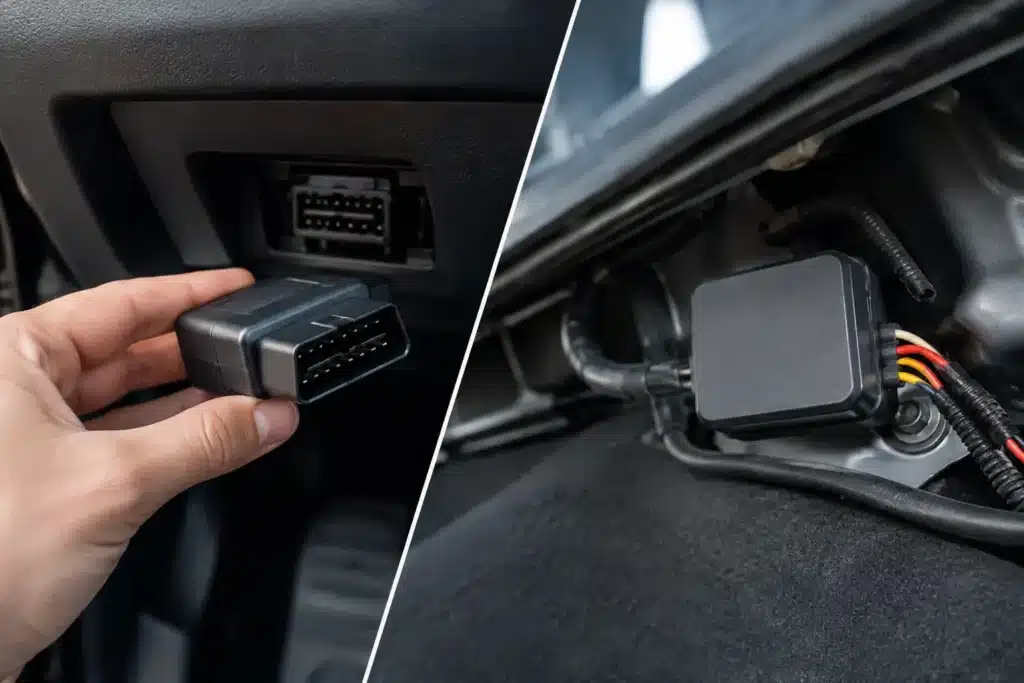
An OBD tracker plugs into a vehicle’s onboard diagnostic port. In most light vehicles, installation takes only a few minutes. The device draws power from the port and can begin reporting location, trip activity, and selected vehicle data once it is configured.
A hardwired tracker is installed behind the dashboard or in another protected location and connected to the vehicle’s power supply, ignition line, and ground. Depending on the device and fleet requirements, it can also connect to inputs for functions such as panic alerts, door status, power take-off operation, or driver identification.
Both options can provide GPS location, route history, geofence alerts, speeding notifications, and idling reports. The difference is not whether a fleet can be tracked. The difference is how securely the tracker remains in place and how much operational data it can support.
When an OBD Tracker Is the Better Choice
OBD tracking is often the practical answer for fleets that need fast deployment without scheduling extensive installation work. A sales fleet, short-term rental fleet, or company cars assigned to mobile staff may benefit from a plug-in tracker when basic location visibility is the immediate priority.
The main advantage is installation speed. There is usually no need to remove dashboard panels, run cables, or keep a vehicle off the road for an extended period. If vehicles are spread across several locations, a fleet team can deploy units quickly and begin monitoring trips with minimal disruption.
OBD devices can also access diagnostic information on compatible vehicles. This may include fault codes, battery voltage, engine-related data, or fuel-related information, although the exact data available varies by vehicle make, model, and device. Fleet managers should not assume every OBD port delivers the same information. Compatibility must be checked before rollout.
This approach has limits. The OBD port is accessible, which means the device is accessible too. A driver can unplug it intentionally, or it can be knocked loose during normal use. In some vehicles, the port location can make the installed device visible or inconvenient for the driver. That may create avoidable disputes and weaken accountability.
OBD trackers are also less suitable when the OBD port is needed for service diagnostics or when a vehicle type does not have a standard compatible port. Heavy equipment, specialized machinery, trailers, and many non-road assets generally require a different installation approach.
Why Hardwired Trackers Are Built for Operational Control
Hardwired tracking is the stronger option when location data must remain consistent, protected, and tied to broader fleet controls. Because the device is concealed and connected directly to the vehicle, it is much harder to remove without authorization.
For a logistics fleet, construction operation, security patrol provider, or field service business, that protection matters. Route compliance, driver behavior, delivery timing, and unauthorized use reports only have value when the tracking device remains active throughout the working day.
A properly installed hardwired tracker can report ignition status with greater consistency and support additional sensors or accessory connections. This makes it a better foundation for higher-control applications, including temperature monitoring in refrigerated vehicles, door opening alerts, panic buttons, fuel level sensors, and power take-off monitoring. The tracker becomes part of an operating system rather than a standalone location device.
Hardwired units normally include an internal backup battery. If main vehicle power is disconnected, the platform can generate a power-loss alert and continue reporting for a limited period. This does not eliminate theft risk, but it gives fleet managers a faster opportunity to investigate tampering or unauthorized battery disconnection.
The trade-off is installation time and technical responsibility. Wiring must be completed correctly to prevent damage, false alerts, battery drain, or unreliable ignition readings. Using an experienced installer is essential, especially for newer vehicles with sensitive electrical systems and for fleets that require documented maintenance standards.
Compare the Decision Factors Before You Deploy
The right tracker is determined by the job the vehicle performs and the level of control the business requires. Price should be considered, but it should not be the only measure. A lower-cost device becomes expensive if missing data leads to fuel loss, unverified overtime, customer disputes, or an inability to investigate an incident.
Tamper Risk and Driver Accountability
If drivers have unrestricted access to the device, OBD tracking presents a higher tamper risk. Some platforms can send unplug alerts, but an alert only tells you that the device has already been removed. Hardwired trackers reduce that exposure because the unit is concealed and its wiring can be monitored.
This is particularly relevant for fleets with shift drivers, subcontracted vehicles, high-value cargo, or recurring concerns about unauthorized trips. A hardwired installation provides clearer accountability without requiring constant manual checks.
Vehicle Type and Asset Use
OBD trackers are primarily suited to compatible passenger cars, vans, and light-duty vehicles. Hardwired trackers work across a wider range of assets, including trucks, buses, generators, construction equipment, refrigerated units, and vehicles with specialized body equipment.
A mixed fleet may need both. There is no operational benefit in forcing a single tracker type onto every asset when the risk profile and usage pattern are different. Executive vehicles may only need discreet trip visibility, while delivery trucks may require hardwired tracking with fuel monitoring and door alerts.
Data Requirements
Choose OBD tracking when GPS location, trip history, and selected diagnostics are sufficient. Choose hardwired tracking when the business needs dependable ignition status, sensor integration, power-disconnect alerts, or control functions such as authorized immobilization where legally appropriate and safely configured.
Fuel monitoring deserves special attention. GPS tracking alone can identify excessive idling, route deviations, and suspicious stops. However, it cannot accurately confirm fuel theft or actual fuel consumption without the right sensor, calibration, and reporting process. Hardwired tracking is generally the proper base for integrated fuel management systems.
Installation and Maintenance Planning
An OBD rollout is fast, but the fleet team must inspect devices periodically to confirm they remain connected. Hardwired installations take longer at the beginning, yet they usually reduce daily intervention once the system is commissioned correctly.
For large fleets, schedule installation in phases. Confirm device compatibility, test reporting quality, establish alert rules, train dispatchers, and then expand. This prevents the common mistake of installing hundreds of trackers before the team has agreed on how alerts will be handled.
A Practical Selection Framework
Start with the operational risk, not the hardware. Ask whether the fleet can tolerate a tracker being unplugged, whether auxiliary sensors are required, and whether vehicle diagnostics are useful enough to justify OBD access. Then consider how long each vehicle will remain in the fleet and whether it is company-owned, leased, rented, or assigned to a contractor.
OBD trackers are often appropriate for low-risk, light-duty fleets that need rapid visibility. Hardwired trackers are usually the better choice for commercial fleets where uptime, asset protection, driver accountability, and integrated reporting affect profitability.
Before installation, define what the management team will do with the data. Set realistic rules for speeding, idling, geofence exceptions, after-hours use, and driver coaching. Tracking data should support fair operational decisions, not create a stream of alerts that nobody owns.
Installation Quality Determines the Result
The best tracker can still fail to deliver value when it is installed poorly or configured without operational planning. A professional deployment should include vehicle assessment, device selection, secure installation, testing of GPS and ignition events, platform configuration, reporting setup, and staff training.
For UAE businesses, this is especially relevant where fleets operate across long routes, high temperatures, busy delivery schedules, and multiple emirates. Equipment must be selected and installed for the working environment, while the reporting process must match the company’s dispatch, maintenance, and security procedures.
ALNAJAH ALAWAL supports fleet operators with GPS tracking and integrated fleet technology designed around real vehicle use, not generic device specifications. The objective is clear reporting, accountable installation, and data your team can act on.
A tracker should not merely show a dot on a map. Choose the installation method that gives your operation reliable evidence when a vehicle, driver, delivery, or asset requires attention.