

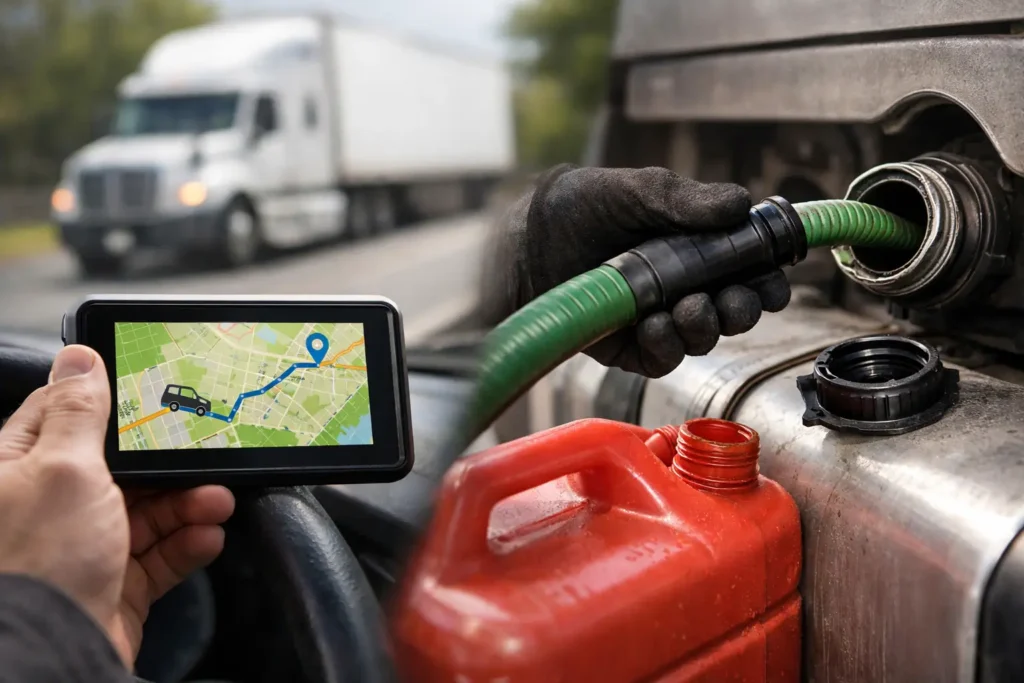
A fuel bill that keeps rising while mileage stays flat is rarely a paperwork problem. For fleet operators, logistics managers, and site supervisors, that pattern usually points to waste, misuse, or theft. Understanding how gps tracking reduces fuel theft starts with a simple fact: when vehicle movement, stops, fill-ups, and fuel levels are visible in one system, fuel becomes much harder to steal without leaving a trace.
Fuel theft is not always dramatic. It can be a few liters drained from a parked truck, a suspicious refill claimed on a route that did not require one, or repeated idling used to hide fuel loss. In larger fleets, these small losses add up quickly. The real cost is not only the missing fuel. It is weaker route control, poor driver accountability, false expense reporting, and reduced confidence in fleet data.
Why fuel theft is difficult to catch without tracking
Most businesses first notice the problem through monthly fuel expenses. By then, the evidence is already weak. Paper fuel receipts can be altered. Driver explanations vary. Manual logbooks often leave gaps. If a vehicle returns late, takes an unauthorized detour, or sits with the engine running at an unapproved location, managers may have no reliable way to verify what happened.
That is where GPS tracking changes the equation. It does not rely on memory or handwritten notes. It records where the vehicle went, how long it stopped, how fast it moved, and when it was used. When integrated with fuel monitoring, it also helps connect fuel events to actual vehicle activity. That makes investigation faster and day-to-day control much stronger.
How GPS tracking reduces fuel theft in practice
GPS tracking reduces fuel theft by creating continuous operational visibility. Instead of checking fuel only at the start or end of a shift, fleet managers can compare location, route behavior, engine status, and fuel readings throughout the day.
If fuel drops while a vehicle is parked at an unauthorized location, that event stands out. If a driver claims heavy traffic caused excess fuel consumption, route history and idle time can confirm or challenge that claim. If a truck refuels twice on a short trip, the system helps verify whether those stops match the assigned route and expected fuel use.
This matters because theft usually depends on weak oversight. Once drivers and operators know the vehicle is being monitored in real time, the opportunity for unauthorized fuel use drops sharply. In many fleets, visibility alone changes behavior before any formal disciplinary action is needed.
Route visibility limits unauthorized stops
One of the most common ways fuel goes missing is through unauthorized route deviations. A vehicle leaves its assigned path, stops at an unapproved location, and returns to route later. Without GPS records, proving the detour is difficult.
A tracking platform shows the exact route taken, stop duration, and travel timeline. That allows managers to identify suspicious patterns such as repeated stops near non-operational locations, unexplained late arrivals, or route extensions that increase fuel consumption. Not every deviation is theft, of course. Traffic, road closures, and customer changes happen. But with route data, it becomes possible to separate legitimate exceptions from repeat misuse.
Idle monitoring exposes hidden fuel loss
Excessive idling is often treated as a driver behavior issue, but it can also hide fuel misuse. A vehicle that sits with the engine on for long periods consumes fuel without completing productive work. In some cases, idling is used to explain fuel loss that actually happened elsewhere.
GPS systems with engine status and idle alerts help managers spot this pattern quickly. If a truck idles for 45 minutes at a location that was not part of the schedule, that is an event worth reviewing. When repeated across multiple vehicles, even moderate idling can create fuel costs that look like theft on paper, and sometimes overlap with it in practice.
Geofencing adds control at high-risk locations
Geofencing allows a business to define approved operating zones, depot areas, project sites, and fueling points. When a vehicle enters or leaves these zones, the system records the event and can trigger alerts.
This helps reduce fuel theft in two ways. First, it limits unsanctioned vehicle use outside working hours or outside approved service zones. Second, it creates a clean record around known fueling locations. If fuel level changes occur away from approved stations, or a vehicle remains parked in a risky area for too long, managers can investigate early instead of waiting for month-end reports.
For fleets operating across warehouses, construction sites, and delivery routes, geofencing creates a practical control layer without adding manual administration.
Fuel sensors and GPS are stronger together
GPS tracking alone is valuable, but fuel theft prevention becomes much more precise when GPS is paired with fuel level sensors or CAN bus fuel data. This combination shows not only where the vehicle was, but also what happened to the fuel inside the tank.
A sudden drop in fuel while parked may indicate siphoning. A refill event recorded at a location with no approved fuel station may suggest manual filling or false reporting. A pattern of small repeated drops overnight can point to depot-side theft. These are the kinds of losses that are easy to miss in spreadsheets and very difficult to dispute when supported by synchronized system data.
There is a trade-off here. Sensor-based fuel monitoring requires correct installation, calibration, and maintenance. Poor setup can produce noisy data and false alarms. That is why businesses with mixed fleets, heavy equipment, or harsh operating conditions should treat implementation as a technical project, not a plug-and-play purchase.
Driver accountability changes behavior
Many fuel losses happen because nobody owns the outcome at vehicle level. When multiple drivers share units, records are weak, or supervision is inconsistent, misuse grows quietly.
GPS tracking improves accountability by tying behavior to specific trips, schedules, and users. Managers can review speeding, harsh acceleration, long idle periods, off-route driving, and after-hours use alongside fuel trends. This does not only help catch theft. It reduces the kind of aggressive or careless driving that raises fuel consumption and creates the impression of theft.
That distinction matters. Not every fuel anomaly is criminal. Sometimes the issue is poor route planning, unauthorized AC use during long stops, engine idling at sites, or untrained drivers. A good system helps identify the cause before management takes action.
Reporting makes exceptions easier to investigate
The biggest operational advantage of GPS tracking is not the map on the screen. It is the reporting discipline behind it. Exception reports can show which vehicles had unusual fuel drops, excessive idle time, repeated off-route stops, or after-hours movement.
That allows fleet teams to focus on the few events that need attention instead of reviewing every trip manually. For companies managing dozens or hundreds of vehicles, this is the difference between having data and actually using it.
A strong reporting setup should match the operation. Delivery fleets may focus on route deviation and idle time. Construction fleets may care more about site geofences, overnight fuel drops, and equipment utilization. Tankers and fuel-handling operations often need tighter event correlation and stricter audit trails.
What businesses should expect after implementation
The first result is usually visibility, not instant savings. Managers begin to see where fuel loss may be happening, which vehicles need closer review, and whether the problem is theft, waste, or weak control. Once monitoring rules are in place and drivers understand that exceptions are reviewed, behavior typically improves.
Savings then come from several directions at once: fewer unauthorized trips, lower idle time, better route discipline, cleaner refill records, and faster response to suspicious activity. Some fleets see obvious reductions quickly. Others improve gradually because the root issue turns out to be a mix of theft and inefficient operation.
For businesses that need reliable fleet control, especially in regulated or high-value operating environments, system quality matters. Installation standards, sensor accuracy, alert configuration, and ongoing support affect the outcome just as much as the software itself. That is why many operators work with a provider that can handle survey, installation, testing, training, and long-term maintenance under one scope.
ALNAJAH ALAWAL SECURITY SYSTEMS & EQUIPMENT TRADING L.L.C. approaches GPS tracking and fuel monitoring the same way serious businesses manage compliance-driven systems: correctly specified, properly installed, and supported for day-to-day operational use.
Choosing the right setup for fuel theft prevention
Not every fleet needs the same level of monitoring. A small urban delivery fleet may get strong results from GPS tracking, geofences, and idle alerts alone. A heavy transport fleet or fuel-sensitive operation will usually need added fuel sensors and deeper reporting.
The right question is not whether tracking can help. It is how much evidence and control your operation needs. If fuel loss is occasional and low-value, basic visibility may be enough. If losses are recurring, difficult to prove, or happening across multiple sites, a more integrated setup is worth the investment.
Fuel theft survives in gaps – gaps in route visibility, supervision, and reporting. Close those gaps, and the problem gets smaller fast. When every liter can be matched against location, movement, and operating behavior, fuel stops being an easy target.