

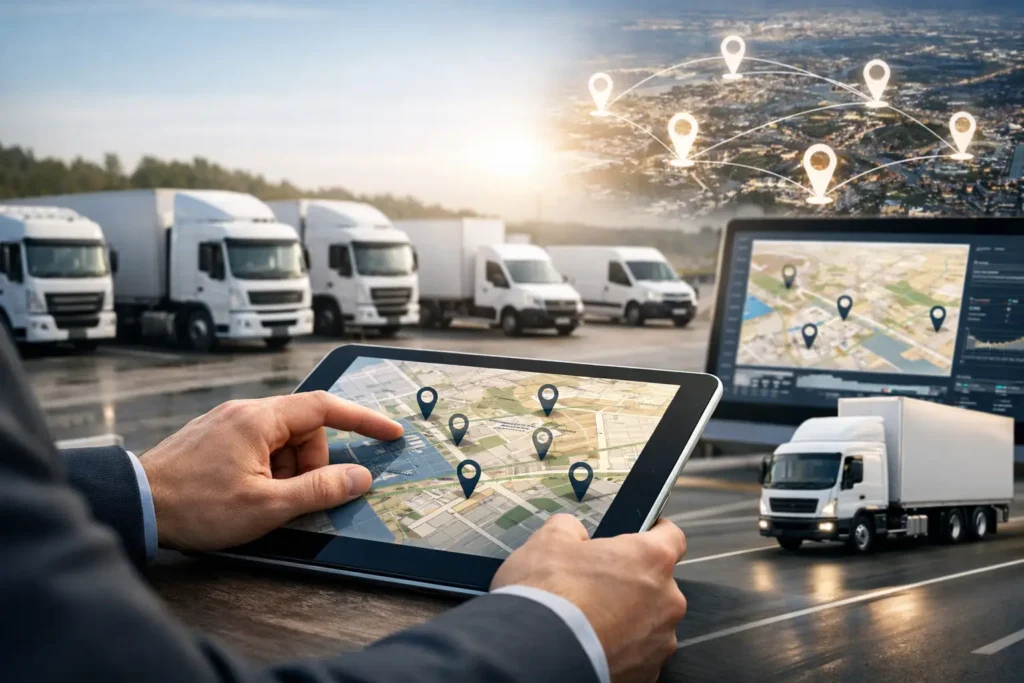
When your operation reaches 500 vehicles, small visibility gaps turn into expensive problems fast. A missed service alert, a driver taking longer routes, or fuel use that looks slightly high on paper can become a serious cost center at scale. That is why fleet tracking for 500 vehicles is not just a visibility tool. It is an operating system for control, accountability, and cost management.
At this fleet size, manual oversight breaks down. Spreadsheets stop reflecting reality by midday. Managers rely on calls and assumptions instead of live status. By the time an issue is discovered, the vehicle has already burned fuel, missed a delivery window, or created a compliance risk. A properly designed tracking platform changes that by giving operations teams one live view of movement, usage, driver behavior, and exceptions.
What changes at the 500-vehicle level
A 20-vehicle fleet can often be managed through close supervision and local knowledge. A 500-vehicle fleet cannot. The challenge is no longer just knowing where vehicles are. The real challenge is managing variation across routes, drivers, departments, shifts, fuel usage, maintenance cycles, and customer expectations.
This is where many businesses make the wrong buying decision. They choose a system built for basic map tracking and assume it will scale. It usually does not. At 500 vehicles, the platform has to support high data volumes, role-based access, alert control, maintenance planning, report automation, and integration with the rest of the business. Without that, the system becomes another screen to watch rather than a tool that improves operations.
A large fleet also brings organizational complexity. Dispatch wants live locations. Finance wants fuel accountability. HR wants driver conduct records. Compliance teams want audit trails. Senior management wants clear reporting tied to cost and asset utilization. The right system has to serve all of them without creating noise.
Fleet tracking for 500 vehicles is about control, not just location
Real-time location remains essential, but by itself it does not solve operational waste. What matters is what the location data tells you when combined with trip history, idle time, harsh driving events, route deviation, unauthorized use, geofencing, and fuel monitoring.
For example, two vehicles may both complete 10 stops in a day. On the surface, performance looks equal. But once tracking data is reviewed, one may have spent 90 extra minutes idling, exceeded speed limits several times, and taken inefficient detours between stops. At 500 vehicles, those differences compound across the fleet every day.
That is why large operators should evaluate tracking systems based on decision-making value, not just the quality of the map interface. A system should help management answer practical questions quickly. Which vehicles are underused? Which routes consistently overrun? Which drivers create the highest fuel burn? Which units need maintenance attention before downtime affects service? If the platform cannot answer those questions clearly, it is too limited for a 500-vehicle environment.
The features that matter most
A fleet this size needs a stable base first. Live vehicle tracking, route playback, geofencing, scheduled reporting, maintenance reminders, and driver behavior monitoring are core functions, not extras. But the difference between a workable system and a strong one usually comes down to how those features are configured.
Alert logic is one example. Too many alerts create fatigue, and teams stop responding. Too few alerts leave blind spots. A good deployment sets priority levels by operational risk. Unauthorized after-hours use may need immediate escalation, while minor speeding events may be included in a weekly exception report. The system should reflect how the business actually runs.
Fuel visibility is another priority. For many large fleets, fuel is one of the biggest variable costs. Tracking alone can indicate inefficiency through idle time and route behavior, but paired fuel monitoring provides stronger control. It becomes easier to identify overconsumption, suspicious refueling patterns, and possible fuel loss. That is especially valuable for logistics, transport, and construction operations where margins are affected by day-to-day field activity.
Maintenance planning also becomes more disciplined with tracking data. Instead of relying only on calendar reminders, managers can schedule service based on mileage, engine hours, or actual usage patterns. This helps avoid the two common failures in large fleets: servicing too late and causing breakdown risk, or servicing too early and increasing unnecessary cost.
Implementation is where most projects succeed or fail
The software matters, but implementation matters more. For fleet tracking for 500 vehicles, rollout planning should be treated as an operational project, not just a device installation exercise.
Vehicle categories should be mapped first. A light delivery van, a heavy transport truck, and a support vehicle may all need different reporting logic, service intervals, and alert thresholds. Driver assignment rules also need to be clear, especially in fleets with shift changes or pooled vehicles. Without clean structure at the beginning, reports become unreliable and management confidence drops.
Installation quality is equally important. Poor wiring, inconsistent device placement, or rushed setup can lead to false signals, downtime, and repeat visits. At 500 vehicles, those errors create avoidable disruption. The right contractor should manage site planning, staged deployment, testing, training, and after-installation support with clear accountability.
It also helps to phase the rollout. Many organizations assume all 500 vehicles should go live at once. That can work, but only if operations are already standardized. In many cases, a phased launch by business unit or vehicle type is safer. It gives teams time to validate reports, tune alerts, and train users before scaling across the full fleet.
Compliance, accountability, and risk reduction
Large fleets carry more than operating cost. They also carry exposure. Vehicle misuse, undocumented movement, poor driver conduct, and maintenance delays can affect safety, insurance, service quality, and internal compliance.
Tracking data creates a record that management can act on. If a customer disputes an arrival time, trip history provides evidence. If a vehicle enters a restricted area, geofence logs show when and for how long. If repeated harsh braking events appear for a driver, coaching can happen before that behavior leads to an incident.
This matters even more in regulated and contract-driven environments, where businesses may need to show control over field operations. Clear records support internal audits, customer reporting, and management review. The value is not just operational. It is protective.
What to look for in a provider
At 500 vehicles, you are not buying a tracker. You are choosing a long-term operating partner. That means technical capability is only one part of the decision.
The provider should be able to handle survey, system design, installation planning, testing, user training, and post-deployment support. They should understand what large fleets need from reporting and how to structure dashboards for different teams. If they cannot explain how they will manage rollout risk, support response, and data accuracy, they are not ready for a project of this size.
It is also worth asking how they handle exceptions after installation. Devices fail. Vehicles get replaced. Business rules change. New branches open. A dependable provider has a support model for those realities instead of treating the job as complete once hardware is mounted.
For businesses operating in the UAE, this execution-first approach matters because project delays and weak vendor coordination can affect operations far beyond the transport department. A company such as ALNAJAH ALAWAL SECURITY SYSTEMS & EQUIPMENT TRADING L.L.C. fits this model when the requirement is not just supply, but controlled deployment, accountability, and ongoing support.
The business case needs to be realistic
Some suppliers promise immediate savings with broad percentages that sound good in a sales meeting. The truth is more specific. Results depend on current fleet discipline, route complexity, driver culture, fuel exposure, and how actively management uses the data.
If your fleet already has strong controls, savings may come from finer optimization and better reporting rather than dramatic cuts. If controls are weak, gains can be substantial, especially in fuel use, idle time, unauthorized movement, and asset utilization. The important point is this: tracking does not create value by itself. Value comes from acting on what the system reveals.
That is why ownership inside the business matters. Someone has to review reports, follow up on exceptions, coach drivers, and align the data with operations. The system provides visibility. Management turns visibility into results.
A 500-vehicle fleet is large enough that even modest improvements become meaningful. Cutting daily idle time by a small margin across the fleet, reducing route drift, and improving maintenance timing can produce a measurable operational impact over the year. More importantly, it gives leadership better control over a moving asset base that is otherwise difficult to manage consistently.
If you are evaluating fleet tracking for 500 vehicles, the best next step is not to ask which platform has the most features. Ask which solution gives your business clearer decisions, cleaner rollout, and stronger control from day one.