

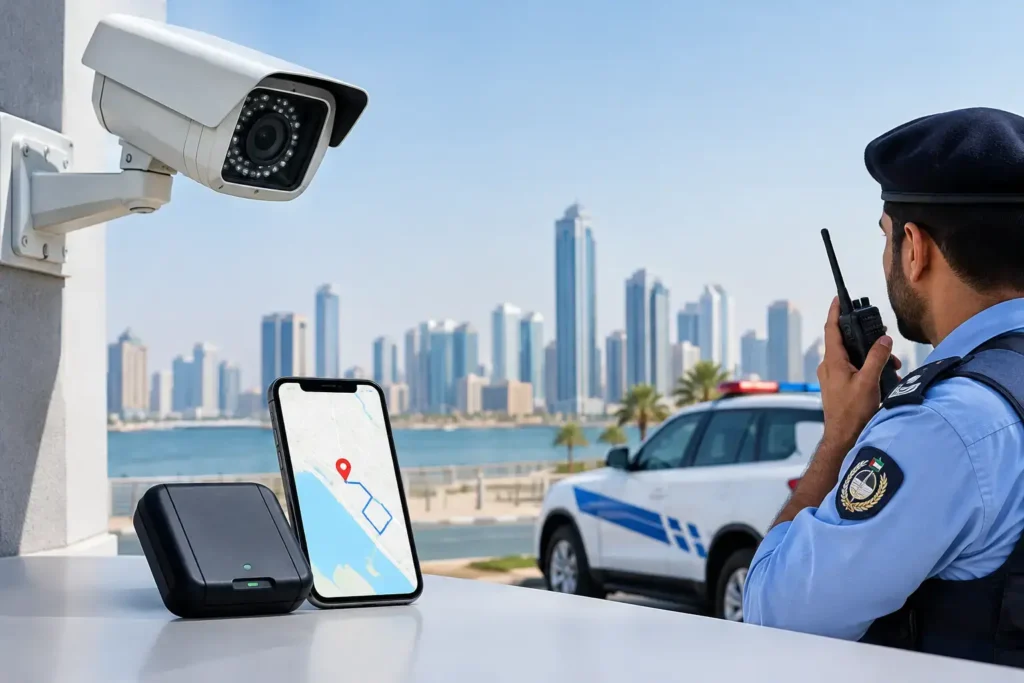
A surveillance installation can look complete and still fail when it matters most: during authority review, after an incident, or when footage is needed but the camera angle, recording quality, or retention period is wrong. For businesses that need a CCTV & GPS company in Sharjah (Sharjah Police approved), the requirement is not simply to purchase cameras or tracking devices. The objective is to install a system that supports approval, daily operations, and accountable security.
ALNAJAH ALAWAL SECURITY SYSTEMS & EQUIPMENT TRADING L.L.C. delivers compliance-led CCTV, GPS tracking, fuel monitoring, access control, and ELV solutions for organizations that cannot afford avoidable project delays. From initial survey through installation, testing, approval support, and maintenance, the focus remains the same: get the system right the first time.
Why Sharjah Police Approval Changes the Project
A compliant CCTV project is designed around more than coverage. Sharjah Police requirements can affect camera positioning, image quality, recording equipment, storage duration, monitoring arrangements, cabling standards, and documentation. These requirements are there to make recorded evidence usable, not merely available.
A common mistake is treating approval as a final administrative step. It starts much earlier. If camera locations do not cover entrances, cash points, loading areas, perimeter lines, or other risk zones properly, correcting the installation later may mean additional equipment, re-cabling, disruption to operations, and delayed handover.
The same applies to recording capacity. A system may display live video correctly but fail to retain footage for the required period at the required quality. Storage calculations must consider the number of cameras, resolution, frame rate, compression method, hours of operation, and retention requirement. Cutting capacity too closely creates a compliance and operational risk.
Requirements can differ by facility type and may be updated by the relevant authority. Warehouses, retail outlets, labor accommodations, industrial sites, clinics, hospitality properties, and high-value businesses do not carry identical risk profiles. A competent contractor reviews the site and applicable requirements before finalizing the design.
What a Sharjah Police-Approved CCTV Installation Should Deliver
The right installation gives management clear visibility while meeting practical authority expectations. It should record identifiable footage at the locations that matter, preserve it reliably, and allow authorized users to retrieve incidents without confusion or delay.
Coverage based on risk, not camera count
More cameras do not automatically mean better security. Camera placement should begin with how people, vehicles, goods, and visitors move through the site. For a logistics facility, that often means gates, vehicle entry and exit lanes, loading docks, warehouse aisles, dispatch areas, and perimeter access. For a retail business, coverage may prioritize entrances, counters, product display zones, back rooms, and cash handling areas.
A professional site survey identifies blind spots, challenging lighting conditions, high-value areas, and routes where an incident could occur without being captured. It also addresses practical constraints such as building layout, mounting surfaces, network pathways, power availability, and access for future maintenance.
Recording that supports investigation and compliance
A camera is only useful if the resulting footage can be reviewed. Poorly selected lenses, incorrect mounting heights, glare from lights, and inadequate night performance can make a person or vehicle impossible to identify. System design must match the required detail at each point, whether the need is general observation, facial identification, or vehicle monitoring.
Recording hardware should be sized with room for operational reality. Expansion plans, increased activity, and future cameras should be considered rather than forcing a complete equipment replacement later. The system should also include controlled user access so that authorized personnel can view, export, and manage footage responsibly.
Reliable installation and documented handover
Compliance depends on execution. Unlabeled cables, exposed connections, unstable network equipment, and poorly installed cameras create faults that can surface at the worst time. Proper testing verifies live view, recording, playback, remote access where required, date and time accuracy, camera fields of view, and storage performance.
At handover, the business should understand how to operate the system, locate footage, and report a fault. Clear documentation and training reduce reliance on guesswork during an urgent incident.
GPS Fleet Tracking Is a Different but Connected Need
CCTV protects a fixed location. GPS tracking protects visibility over moving vehicles, mobile assets, and field operations. For fleet operators in Sharjah, the value is immediate: management can verify location, trip history, route deviations, idle time, driver behavior, and vehicle utilization from a central platform.
It is worth making a clear distinction. Sharjah Police approval relates to the applicable CCTV installation and security requirements. GPS tracking is selected according to fleet operational needs, vehicle type, reporting requirements, and any relevant transport or client obligations. A provider should not blur these two scopes or make unsupported claims about approvals.
For a delivery fleet, route history and unauthorized stops may be the priority. For construction or industrial vehicles, engine hours, asset use, and geofence alerts can be more valuable. For transport businesses, speeding alerts, harsh braking records, trip reports, and driver accountability may have the greatest impact.
Fuel monitoring can add another layer of control where consumption is a major cost. Depending on the operating environment, a fleet can use fuel-level data, refueling records, consumption reporting, and alerts for unusual drops in fuel level. The right setup depends on the vehicle, tank configuration, work pattern, and the accuracy required.
Choosing a CCTV and GPS Company in Sharjah
The best contractor is not necessarily the one offering the lowest equipment price. A lower upfront quote can become expensive when it excludes site design, storage sizing, authority documentation, commissioning, staff training, or post-installation support. Ask what is included before comparing proposals.
A capable CCTV and GPS company in Sharjah should be able to explain the scope in operational terms. You should know which areas will be covered, what each camera is intended to capture, how long footage will be retained, how the system will be tested, and what support is available after handover. For GPS projects, you should also understand reporting access, alert configuration, installation method, data visibility, and who will manage the platform internally.
Look for a contractor that takes ownership of the complete project. That includes survey, design, equipment supply, installation, testing, commissioning, approval processing support, user training, and ongoing maintenance. When these stages are fragmented among multiple vendors, responsibility becomes unclear if approval is delayed or a fault appears.
Questions to ask before signing
Before appointing a contractor, ask whether the proposed CCTV design has been reviewed against the requirements applicable to your premises. Confirm how recording retention has been calculated, what documents will be provided for approval, and what happens if the authority requests a modification.
For GPS, ask whether the platform provides the reports your managers will actually use. A feature-heavy dashboard has little value if supervisors only need daily mileage, exception alerts, trip history, and fuel performance. The most effective fleet system is the one that becomes part of normal operations.
Avoiding Delays During CCTV Approval
Approval delays often come from preventable gaps: incomplete drawings, unsuitable camera views, insufficient storage, incorrect equipment specifications, or installation work that does not match the approved design. These are not minor issues when a new facility, tenancy opening, or project handover depends on compliance.
Start with a detailed survey and share accurate floor plans, site use, operating hours, and any construction limitations. If the site is still under fit-out, coordinate CCTV containment, power points, network routes, and mounting locations with the MEP and fit-out teams early. This avoids visible surface cabling, last-minute relocations, and damage to finished interiors.
Businesses should also plan for future changes. A warehouse may add racking, a retailer may alter layouts, and a property owner may divide a unit into separate spaces. Reviewing the surveillance design after major changes helps maintain meaningful coverage and compliance.
Security That Keeps Operations Moving
The strongest CCTV and GPS projects are planned around one practical question: can your team act on the information the system provides? Security footage should help investigate incidents. Fleet data should help control costs and improve accountability. Compliance should support opening, operating, and expanding without unnecessary interruptions.
Choose a contractor that treats authority approval, installation quality, and long-term support as one responsibility. Stay compliant. Stay protected. And make sure the systems protecting your premises and vehicles are ready when your business needs them.