

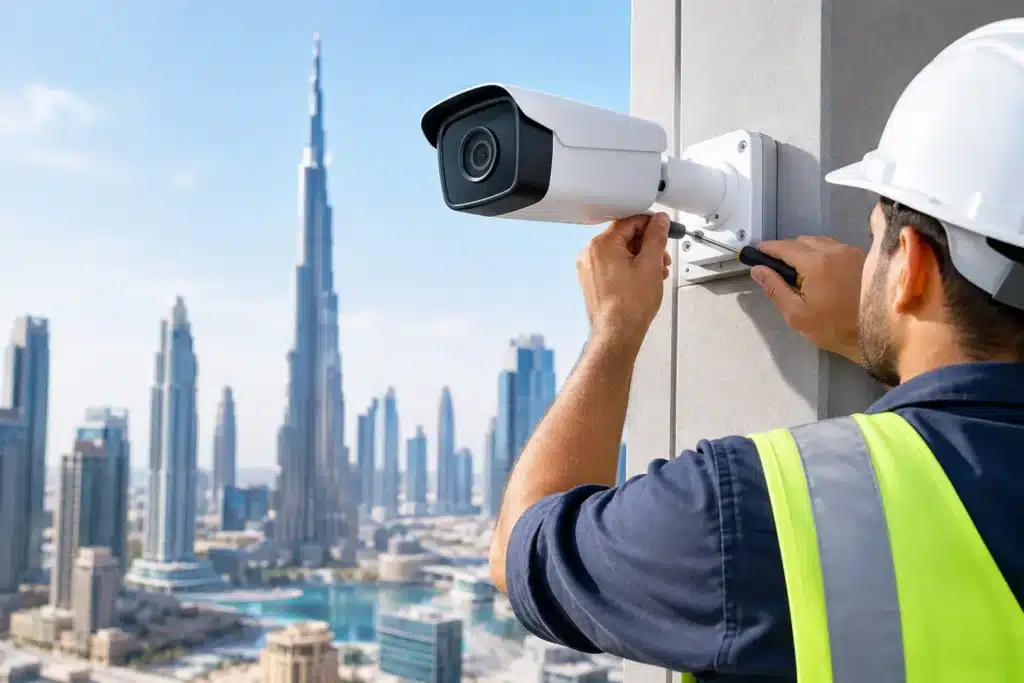
A SIRA approved CCTV installation Dubai project is not simply a matter of mounting cameras and connecting a recorder. For a warehouse, retail store, hotel, office building, jewelry business, or construction site, the system must satisfy security objectives and authority requirements at the same time. A missed coverage area, incorrect camera specification, or incomplete submission can delay approval and affect opening dates, handover schedules, or daily operations.
The right approach starts before equipment is ordered. It begins with a detailed assessment of the premises, the nature of the business, entry and exit points, high-risk areas, and the applicable SIRA requirements. When compliance is treated as part of the design process rather than a final inspection task, businesses avoid rework, cost overruns, and unnecessary delays.
What SIRA Approval Means for CCTV Projects
SIRA is Dubai’s Security Industry Regulatory Agency. Its requirements are designed to ensure that surveillance systems provide meaningful, usable security coverage for the premises they protect. Approval depends on more than the number of cameras installed. The authority evaluates whether the design, equipment, recording capability, installation quality, and project documentation meet the required standard.
The exact requirements depend on the site type and risk profile. A small retail outlet will not necessarily require the same layout as a logistics yard, a residential tower, or a gold and jewelry facility. This is why copying another property’s camera plan is a poor shortcut. The design must reflect the actual premises, operational workflow, and authority criteria.
A compliant system typically considers camera placement at entrances and exits, cash handling areas, reception points, corridors, loading bays, parking areas, perimeter boundaries, and other sensitive zones. The footage must be clear enough for its intended purpose. A camera that records a wide scene but cannot identify activity at a critical doorway may not deliver the protection or compliance outcome the site needs.
The Site Survey Sets the Project Up for Approval
A proper site survey turns a broad security requirement into an executable plan. During this stage, a qualified contractor reviews building drawings where available, inspects sightlines, identifies lighting conditions, checks cable routes, and confirms where network equipment and recording devices can be safely installed.
This is also where practical issues become visible. A camera may have a clear view during the day but perform poorly at night because of glare from exterior lights. A loading dock may need coverage that accounts for vehicle movement, delivery schedules, and shutter positions. In a warehouse, high shelving can block camera views that appeared adequate on a floor plan.
The survey should establish the correct camera types, mounting heights, lens selection, storage requirements, power needs, and communication infrastructure. It should also account for future expansion. Installing a system with no capacity for additional cameras may look economical at first, but it can create unnecessary disruption when the business grows or operating risks change.
SIRA Approved CCTV Installation Dubai: Design Before Devices
Equipment selection should follow the approved design, not lead it. Businesses sometimes focus on camera resolution alone, assuming that a higher megapixel rating solves every security concern. Resolution matters, but it is only one part of system performance. Camera angle, lighting, lens choice, installation height, recording settings, and network bandwidth all affect the quality of usable footage.
For example, a high-resolution camera pointed toward a bright entrance can still produce poor facial detail if backlighting is not addressed. A large industrial yard may require a combination of fixed cameras for consistent coverage and specialized cameras for broad-area monitoring. A retail location may prioritize entrances, counters, stockrooms, and emergency exits, while a hospitality property may need careful coverage of public areas without compromising privacy or guest operations.
The recorder and storage configuration are equally important. The system must retain footage for the required period at the necessary quality level. This requires accurate calculation of camera count, resolution, frame rate, compression settings, activity levels, and available storage. Underestimating storage can result in recordings being overwritten too soon. Over-specifying it without a clear reason can add avoidable cost.
A professional design balances authority compliance, operational needs, budget, and future scalability. The least expensive proposal is not always the lowest-cost outcome if it leads to redesign, additional equipment, or a failed inspection later.
Installation Quality Is Part of Compliance
Even approved equipment can fail to perform when installation is poorly executed. Cabling must be routed and terminated correctly, camera housings must be securely mounted, network devices must be properly configured, and equipment cabinets should remain accessible for maintenance without being exposed to unauthorized interference.
Camera views need to be verified after installation, not assumed from the design. Small changes in mounting position can affect identification quality, blind spots, reflections, or coverage of a door threshold. Technicians should test live views in realistic conditions, including low-light periods where relevant, and make adjustments before final commissioning.
The system should also be configured with disciplined user access. Authorized staff need clear procedures for viewing footage, exporting evidence, checking system health, and reporting faults. A surveillance system only supports an investigation when staff can retrieve the right recording quickly and the footage is available when needed.
For larger sites, integration with access control, intrusion alarms, intercoms, or central monitoring may be appropriate. Integration can improve incident response, but it adds design dependencies. It should be planned carefully so that one system does not create an operational weakness in another.
Documentation and Authority Processing Matter
Compliance-driven CCTV projects require more than technical work on site. Drawings, equipment details, camera layouts, and required project documents must be prepared accurately and submitted in the correct format. Incomplete or inconsistent documentation can slow the approval process even when the physical installation is sound.
This is where an end-to-end contractor adds real value. The same team that surveys, designs, supplies, and installs the system understands why each camera is positioned where it is and can resolve questions without passing responsibility between multiple vendors.
ALNAJAH ALAWAL SECURITY SYSTEMS & EQUIPMENT TRADING L.L.C. manages the process from site survey through design, installation, testing, commissioning, approval coordination, and post-installation support. This single-vendor accountability helps clients keep control of project timelines and reduces the risk of compliance gaps between design and execution.
Common Mistakes That Delay Approval
Most avoidable delays come from planning errors rather than complex technical faults. These issues should be identified before installation begins:
- Selecting cameras based on price or resolution without confirming their suitability for the required coverage and operating conditions.
- Leaving blind spots at entry points, cash areas, loading zones, perimeter boundaries, or other critical locations.
- Underestimating recording storage or failing to confirm that footage can be retrieved clearly when required.
- Using inaccurate drawings or submitting documentation that does not match the final installed layout.
- Treating testing, user training, and maintenance as separate from the compliance process.
Each issue can create rework. In active commercial environments, rework also means additional access requirements, disruption to tenants or staff, and pressure on project deadlines.
Commissioning and Ongoing Support Protect the Investment
Commissioning is the point at which the installation becomes an operational security system. It includes confirming camera views, recording performance, date and time settings, storage operation, user permissions, remote access where authorized, and alarm or integration functions where applicable.
Staff training should be practical. Site managers and designated users should know how to confirm that cameras are recording, locate footage by date and time, export clips when required, and escalate technical faults. A system that no one knows how to operate properly creates risk, regardless of the equipment quality.
Maintenance also matters after approval. Cameras can shift, lenses can become dirty, hard drives can degrade, and network changes can interrupt recording. Scheduled preventive maintenance identifies these issues before an incident exposes them. It also helps businesses maintain consistent compliance as premises, layouts, and operations evolve.
Questions Businesses Ask Before Installing CCTV
Can an existing CCTV system be upgraded for SIRA approval?
Sometimes. Existing cameras, cabling, and recorders may be retained if they meet the required specifications and perform correctly. However, an assessment is essential. Older systems often have gaps in coverage, insufficient storage, poor image quality, or documentation that no longer reflects the site.
How long does approval take?
Timing depends on the property type, site readiness, documentation quality, authority review, and whether changes are required after inspection. The most reliable way to protect the schedule is to start with a compliant design and complete documents before the project reaches its final handover stage.
Is maintenance required after installation?
Maintenance is strongly recommended because system health affects both security performance and continuing compliance. Regular inspections, recording checks, storage reviews, camera cleaning, and prompt fault correction reduce the risk of footage being unavailable when it matters.
A compliant CCTV project should give management more than an approval certificate. It should provide clear visibility of the premises, reliable evidence when incidents occur, and confidence that the security system will support operations day after day. Stay compliant. Stay protected.