

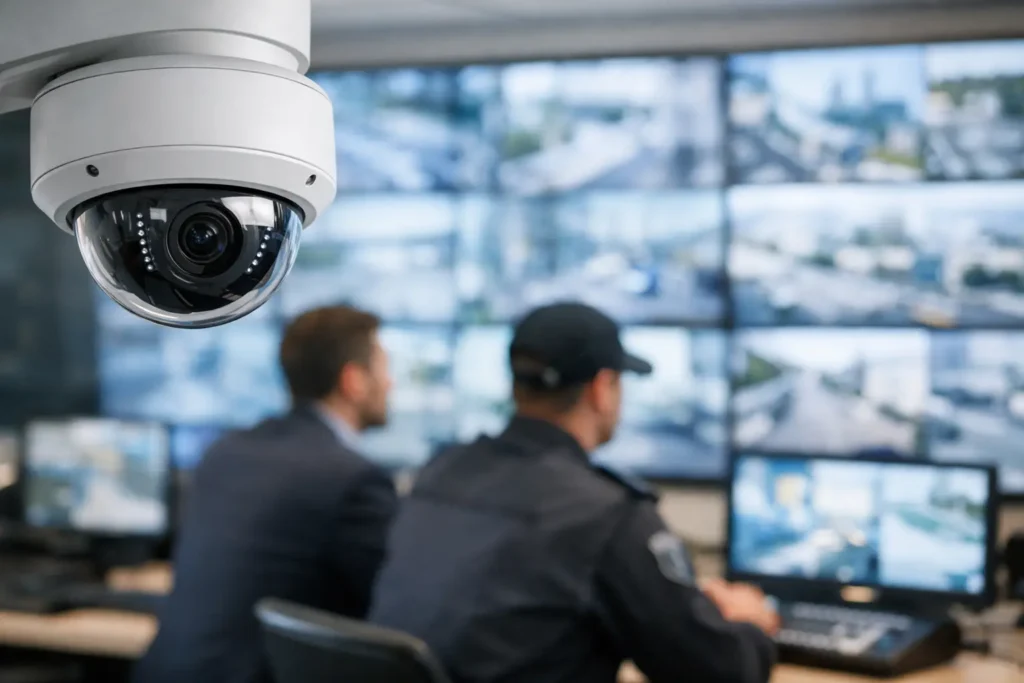
If you are planning a CCTV installation in Dubai, the question is not just what cameras to buy. The real question is what is SIRA approved CCTV, and whether your site will pass inspection the first time. For commercial properties, warehouses, retail stores, labor accommodations, and many regulated facilities, approval is not a bonus. It is part of the job.
SIRA approved CCTV refers to a surveillance system that meets the standards set by the Security Industry Regulatory Agency in Dubai. That approval is not limited to the camera brand alone. It typically covers the full compliance picture – system design, camera placement, recording quality, storage duration, cabling, control room setup, and installation by an approved contractor where required.
That distinction matters because many businesses assume buying good equipment is enough. It is not. A high-spec camera installed in the wrong location, with the wrong retention settings, or without proper documentation can still fail compliance.
What is SIRA approved CCTV in practical terms?
In practical terms, a SIRA approved CCTV system is one designed and installed to satisfy regulatory requirements for a specific type of premises in Dubai. The standards can vary depending on the activity, risk category, and property type. A retail shop does not always face the same surveillance requirements as a warehouse, a jewelry outlet, or a commercial tower.
SIRA approval usually focuses on whether the system can actually serve its security purpose. That includes image clarity, coverage of key areas, recording continuity, access to footage, and proper storage. Regulators want a system that can support investigations, deter misuse, and provide reliable evidence when needed.
This is why compliance is often more detailed than clients expect. It is not only about entrances and exits. The review may also consider corridors, loading areas, cashier zones, perimeter coverage, parking access, server rooms, reception points, and other operationally sensitive spaces.
Why businesses ask what is SIRA approved CCTV before installation
Most businesses ask this question when they are opening a new facility, fitting out a commercial space, renewing a license, or responding to a compliance requirement. The concern is usually the same: avoid delays, avoid rework, and avoid failing inspection after money has already been spent.
That concern is justified. A non-compliant system can lead to extra installation costs, replacement of equipment, missed opening dates, and repeated authority visits. For contractors, developers, and facility teams, that turns a straightforward security scope into a project risk.
A compliant system does more than satisfy a regulator. It gives management confidence that the surveillance setup was designed with clear standards in mind. That reduces gaps, improves accountability, and makes ongoing maintenance easier because the original system structure is documented properly.
What SIRA approval usually covers
The exact requirement depends on the site, but SIRA approval usually covers more than many buyers expect. Camera resolution must be fit for the intended use. Recording devices must support the required storage period. Camera views must capture critical points without blind spots. Cabling, power backup, network structure, and monitoring arrangements may also need to meet defined expectations.
There is also an approval process element. In many projects, drawings, device schedules, and technical details must be submitted for review before final inspection. After installation, the site may need testing and verification to confirm the approved design was actually executed.
This is where many projects slow down. A supplier may be able to deliver equipment quickly, but compliance depends on design coordination, documentation, and installation quality. If those pieces are handled separately by different parties, mistakes are common.
SIRA approved CCTV is not the same as any CCTV system
This is the point many property owners miss. Any CCTV system can record video. A SIRA approved CCTV system is built to meet a regulatory standard and support inspection approval.
The difference shows up in planning. A standard installer might focus on budget and basic coverage. A compliance-focused contractor starts with authority requirements, risk areas, camera positioning, storage calculations, and approval workflow. That approach can appear more demanding at the start, but it usually prevents expensive corrections later.
There is also a long-term difference. Systems that are installed only to meet a low price often create problems after handover. Footage quality may be poor, storage may run out too early, camera angles may be blocked by site changes, and maintenance becomes reactive instead of planned. A properly approved system is usually better structured for operation over time.
Who needs a SIRA approved CCTV system?
Not every property has the same obligation, and the exact requirement should always be checked against the site activity and local rules. Still, SIRA compliance is commonly relevant for commercial and regulated environments in Dubai, especially where security oversight, licensing, or authority approvals are part of the operating model.
This often includes warehouses, logistics sites, retail outlets, hospitality facilities, labor accommodations, clinics, industrial units, schools, high-footfall properties, and high-risk businesses such as gold and jewelry operations. Developers and fit-out contractors also need to think about SIRA early, because CCTV design can affect construction coordination, electrical works, and project handover timelines.
For multi-site operators, the issue becomes even more important. If surveillance standards vary from branch to branch with no compliance framework, maintenance costs rise and audit readiness gets worse.
Common mistakes that cause approval delays
The most common mistake is treating CCTV as a late-stage purchase instead of a compliance package. When the system is added at the end of a project, there is less time for design review, authority submission, cable route planning, and corrective work.
Another common issue is choosing equipment before understanding the site category. The right camera for a small office may not be suitable for a warehouse loading bay or an external perimeter. Storage is another weak point. Clients often underestimate how much capacity is required to meet recording retention rules while keeping footage accessible and usable.
Documentation problems also cause delays. Even when the physical installation looks acceptable, missing drawings, unsupported device specifications, or mismatches between submitted design and actual installation can hold up approval.
Why the contractor matters as much as the equipment
A compliant result depends on execution. That means the contractor should understand not only surveillance hardware, but also site survey methods, authority processes, testing standards, and post-installation support.
This is especially important on active commercial sites where work must be completed without disrupting operations. A poorly managed contractor may install the system, but leave the client to deal with inspection comments, missing documents, configuration issues, or approval follow-up. That is where project time gets lost.
An experienced compliance contractor approaches the work differently. The survey is more detailed. Drawings are prepared with approval in mind. Installation follows the approved scope. Testing is documented. Staff can be briefed on system use, and maintenance planning starts before faults become business risks.
ALNAJAH ALAWAL SECURITY SYSTEMS & EQUIPMENT TRADING L.L.C. works on this basis across compliance-driven CCTV projects, where the requirement is not just to install cameras, but to get the system approved right the first time and keep it operating correctly after handover.
What to ask before you proceed
If you are evaluating a CCTV project, ask whether the proposed system is designed for your site category, whether the equipment and layout align with current authority requirements, and who will handle approvals, inspection coordination, testing, and corrective action if comments are raised.
You should also ask about storage duration, image quality at critical points, remote access controls, maintenance response, and how future expansion will affect compliance. A system can pass at handover and still become problematic later if there is no support structure behind it.
The right answer is not always the cheapest answer. It depends on the site, risk level, and approval requirement. But the cost of getting it wrong is usually higher than the cost of doing it properly from the start.
Final thought on what is SIRA approved CCTV
What is SIRA approved CCTV? It is a surveillance system planned, installed, and documented to meet Dubai’s regulatory requirements – not just a set of cameras on the wall. If your facility depends on compliance, opening deadlines, or operational continuity, that difference matters. The safest approach is simple: treat CCTV as a regulated system from day one, and your approval process becomes far more manageable.